Wild Animals That Look Innocent
Wild Animals That Look Innocent But Are Surprisingly Dangerous
A tourist crouches beside a tide pool on an Australian beach. There, nestled among the rocks, is a tiny octopus no bigger than a golf ball — pale, almost translucent, pulsing with small blue rings that shimmer like jewelry. She reaches in. The octopus is beautiful. The octopus is also carrying enough venom to kill 26 adults in minutes, and there is no antivenom on Earth.
She didn’t know. How could she? It was so small.
This is the trap. Not the octopus’s trap — ours. The human brain is wired to interpret certain physical features as safe: large eyes, round faces, soft bodies, small size, slow movement. Ethologist Konrad Lorenz called this the baby schema — a set of infantile features that trigger nurturing instincts in humans. Big eyes say “protect me.” Rounded proportions say “I’m harmless.” We can’t help it. The response is automatic, ancient, and completely unreliable when applied to wildlife.
Evolution knows this about us. And evolution doesn’t care about our feelings.
Some of the most dangerous animals on the planet look like plush toys. Some of the most venomous creatures fit in the palm of your hand. And some of the animals most likely to send you to the hospital look like they’d rather eat grass and be left alone.
This article covers three categories of deceptive appearance: animals that look harmless but carry powerful defenses, animals that look cute but are genuine apex predators, and animals that look docile but are deeply territorial and will escalate faster than you can back away.
After working with and researching animals for years, the ones that have surprised me most aren’t the ones with fangs and claws — they’re the ones that made me think “oh how adorable” right before I understood what they were actually capable of.
“In nature, the most dangerous things rarely look dangerous. That’s the entire point.”
The Animals: 12 Creatures That Aren’t What They Look Like
| Animal | Looks Like | Actually Is | Danger Level | Found Where |
|---|---|---|---|---|
| Slow Loris | Cuddly big-eyed toy | Only venomous primate | High | Southeast Asia |
| Swan | Graceful, romantic bird | Territorial attacker | Moderate | Worldwide lakes & rivers |
| Platypus | Nature’s cartoon animal | Venomous spur carrier | Moderate | Eastern Australia |
| Puffer Fish | Chubby, spotted, adorable | Carries one of nature’s deadliest toxins | High | Tropical oceans worldwide |
| Cassowary | Colorful, flightless bird | Living dinosaur with a blade for a toe | High | Australia, New Guinea |
| Honey Badger | Small, fluffy, waddling | Arguably the most fearless animal alive | High | Africa, Middle East, India |
| Blue-Ringed Octopus | Tiny, jewel-like beauty | Lethal with no antivenom | Extreme | Indo-Pacific tide pools |
| Moose | Goofy oversized horse | Most frequent large-animal attacker in N. America | High | Northern US, Canada, Scandinavia |
| Wolverine | Small, bear-cub-like | Drives grizzlies off kills | High | Arctic & subarctic regions |
| Leopard Seal | Big-eyed, smiling face | Apex predator that hunts seals | High | Antarctic waters |
| Cape Buffalo | Very large, slow cow | Known as “the Black Death” | Extreme | Sub-Saharan Africa |
| Slow Worm | Tiny, scary snake | Harmless legless lizard | None | Europe, Western Asia |
Slow Loris — The Internet’s Favorite Venomous Primate
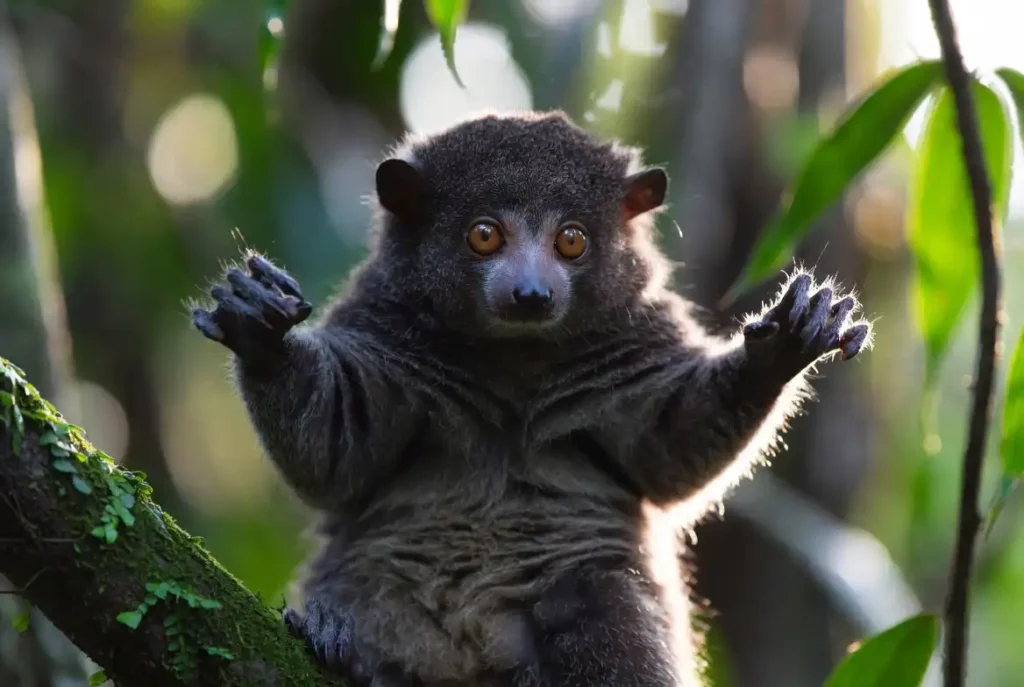
Those enormous, round eyes. That deliberate, almost hypnotic slow movement. The way it raises its arms when a human hand comes near, like it’s asking to be held. Millions of people watched those videos and thought: I need one.
The slow loris is the only venomous primate on Earth. It has a brachial gland on the inside of each elbow that produces a toxin. When threatened, the loris licks these glands, mixes the secretion with saliva, and delivers a venomous bite that can cause anaphylactic shock in humans — sometimes fatal.
Those viral “tickle” videos? The loris raising its arms isn’t enjoying the interaction. It’s raising its arms to access its venom glands. That’s a stress response, not delight.
⚠️ Expert Warning: Why Slow Loris “Tickle” Videos Are Actually Animal Cruelty — And What They Really Show
The moment I learned about the slow loris’s venom, I looked at those viral videos very differently. To make lorises “safe” for the pet trade, their teeth are often clipped or ripped out with nail clippers — without anesthesia. The “cute” loris in those videos is a mutilated, terrified animal performing a stress behavior that humans misread as affection. The IUCN Red List classifies multiple slow loris species as Vulnerable or Endangered, with the illegal pet trade driven by social media as a primary threat.
Swan — The Wedding Symbol That Will Hospitalize You
Swans are synonymous with grace, elegance, and lifelong devotion. They’re on greeting cards. They form heart shapes at resorts. They are also among the most aggressively territorial birds alive.
During nesting season, a swan — particularly a mute swan — will attack anything that enters its zone. Wing strikes deliver enough force to bruise bone and, in rare cases, fracture small bones. They’ve knocked kayakers out of boats. They’ve charged joggers along waterways. The escalation from “elegant bird on water” to “150-pound bird running at you with wings out” happens in seconds.
The trigger is proximity to their nest. Keep your distance between March and June near any body of water with resident swans, and that elegant bird stays elegant.
Platypus — Nature’s Joke With a Hidden Weapon
The platypus looks like a committee designed it: a duck bill, beaver tail, otter feet, and a body plan that seems like a biological rough draft. It’s arguably the most cartoonish real animal on the planet.
Male platypuses carry venomous spurs on their hind legs that deliver a cocktail of venom so painful that human victims have described it as the worst pain they’ve ever experienced — and it doesn’t respond to standard painkillers, including morphine. The pain can last for weeks.
The venom isn’t for predators or humans — it’s for other male platypuses during mating season competition. You just happen to be collateral damage if you try to pick one up.
Puffer Fish — The Adorable Balloon Carrying 1,200 Times the Toxicity of Cyanide
Round. Spotted. Big-eyed. When threatened, it inflates into a spiky ball that looks more like a bath toy than a weapon. The puffer fish might be the most disarming-looking lethal animal in the ocean.
Inside that cartoonish body is tetrodotoxin — one of the most potent natural toxins ever discovered. A single puffer fish carries enough to kill 30 adult humans. There is no antidote. The toxin paralyzes muscles while the victim remains fully conscious.
Tetrodotoxin is roughly 1,200 times more poisonous than cyanide per unit weight.
The puffer fish is a slow swimmer — it evolved this chemical arsenal precisely because it can’t outrun anything.
In Japan, puffer fish (fugu) is considered a delicacy. Chefs must train for years and pass rigorous exams to prepare it safely. Even so, accidental poisonings still occur.
Cassowary — A Living Dinosaur With a Blade for a Toe
The cassowary is a striking, colorful flightless bird from the rainforests of Australia and New Guinea. With its bright blue neck and red wattle, it looks like an evolutionary art project. It also looks like something you could outrun.
You can’t. Cassowaries reach 30 mph, jump five feet vertically, and swim. Their inner toe carries a dagger-like claw up to five inches long that they use as a slashing weapon. A cassowary kick can disembowel a predator — or a person. As recently as 2019, a cassowary killed its owner in Florida after the man fell in the bird’s enclosure.
They’re considered one of the most dangerous birds on Earth, though attacks are rare when humans simply maintain distance.
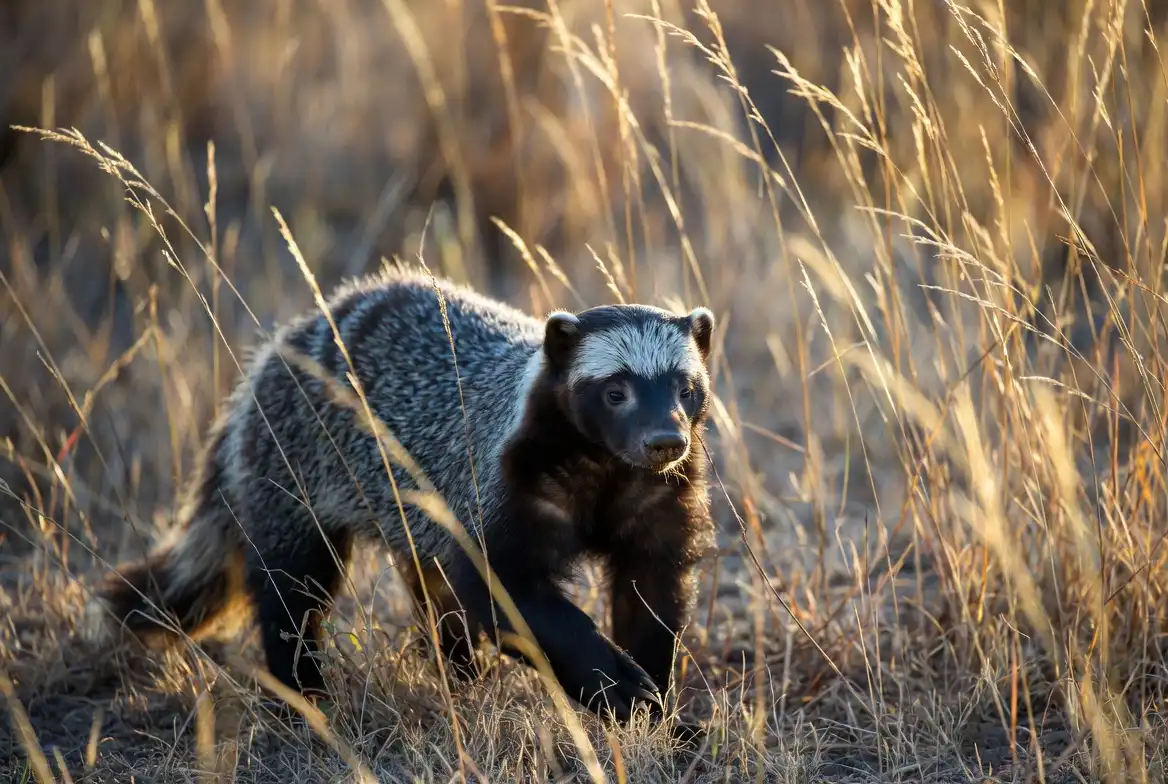
Honey Badger — 30 Pounds of Absolute Chaos
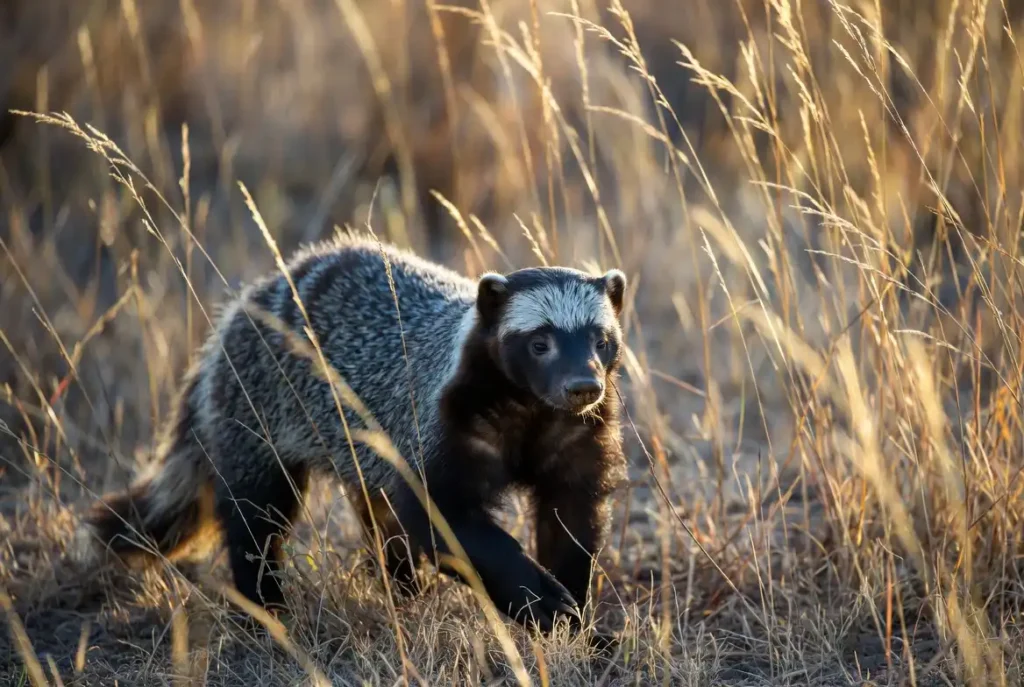
Small. Almost fluffy. Moves with a waddling casualness that screams “I’m not a threat.” Many animal lovers don’t realize the honey badger is widely considered the most fearless animal per body weight on the planet.
They’ve been documented attacking lions, charging leopards, fighting cobras, and raiding beehives while being stung hundreds of times — and walking away to do it again the next day. Their skin is so thick and loose that predators that grab them often can’t get a grip, and the badger simply turns around inside its own skin and bites back.
That black-and-white coloring that looks charming? In nature, it’s a warning pattern — the same color scheme used by skunks and other animals that are telling you: don’t bother.
Blue-Ringed Octopus — Beautiful, Palm-Sized, and Lethal in Minutes
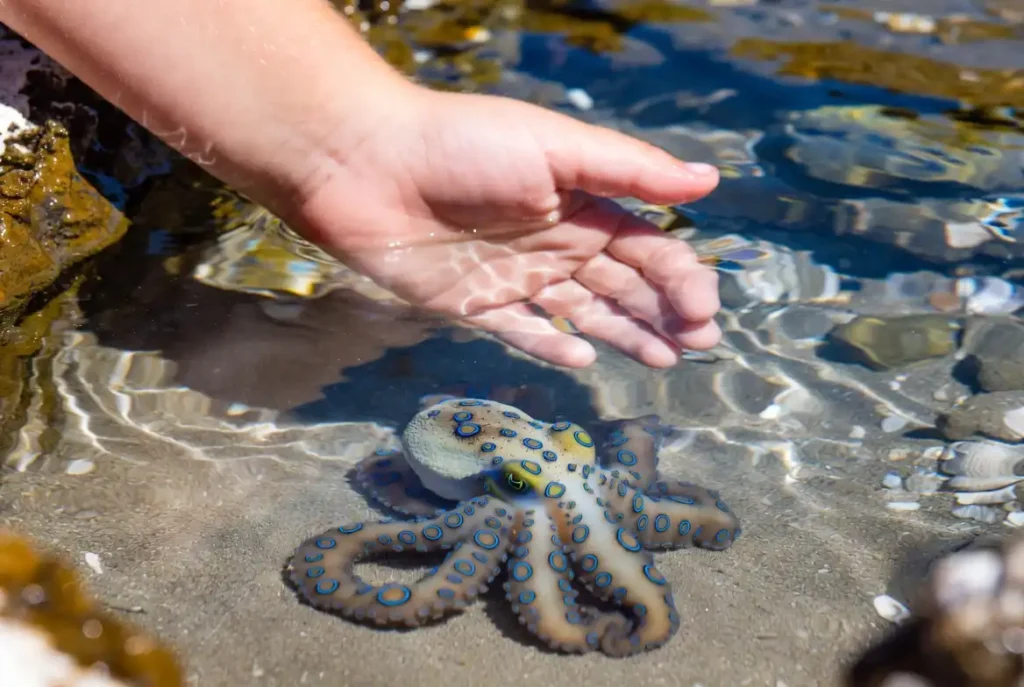
It fits in a human hand. When calm, it’s pale and nearly invisible against the sandy ocean floor. When agitated, it lights up with iridescent blue rings that are breathtakingly beautiful. People instinctively reach for it.
That display is not beauty. It’s a final warning. The blue-ringed octopus carries enough tetrodotoxin to kill 26 adult humans in a single encounter. There is no antivenom. Death can occur within minutes from respiratory paralysis. And these octopuses live in shallow tide pools — the exact places where children wade and play.
Most people assume that dangerous means large and aggressive — nature doesn’t work that way.
Moose — The Gentle Giant That Isn’t Gentle
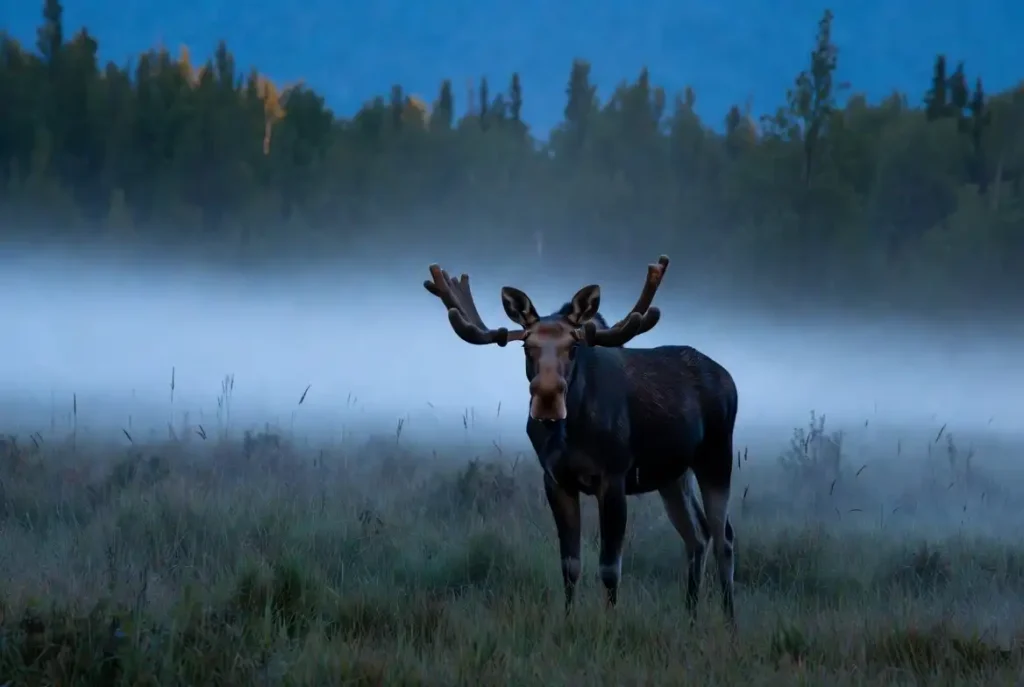
Moose look like large, awkward, friendly horses with absurd antlers. They move slowly. They eat plants. They stand in lakes looking like oversized lawn ornaments. Surely the most dangerous thing about them is hitting one with your car.
Moose are responsible for more attacks on humans than bears and wolves combined across North America. They’re unpredictable, territorial during rut, fiercely protective when cows have calves, and they weigh up to 1,500 pounds. When a moose charges, it stomps with front hooves that hit with enough force to kill.
People underestimate them because they look slow and herbivorous. A moose can close a 30-foot gap faster than you can process what’s happening.
Wolverine — Compact, Fluffy, and Feared by Grizzlies
At a distance, a wolverine looks like a small bear cub — maybe 30 to 40 pounds of dark, fluffy fur waddling through the snow. Up close, it is one of the most formidable predators per body size in the animal kingdom.
Wolverines have been documented driving full-grown grizzly bears away from kills. Their jaw strength relative to body size is extraordinary — capable of crushing frozen bone. They patrol territories spanning 500 square miles. And unlike almost every other animal, a wolverine will pursue a threat rather than flee from one.
In my experience, the animals that surprise people most aren’t the large predators with obvious weapons. It’s the compact ones who simply decided they were never going to lose a fight.
Leopard Seal — The Smile That Hunts Penguins
Seen from above water, a leopard seal has enormous dark eyes and a mouth shape that genuinely looks like it’s smiling. Wildlife photographers sometimes describe them as “friendly-looking.”
That “smile” is jaw structure — a wide gape designed for catching and processing prey. Leopard seals are apex predators in Antarctic waters, hunting penguins, fish, squid, and other seals. In 2003, a marine biologist was killed by a leopard seal that dragged her underwater during a snorkeling expedition in Antarctica.
They’re not aggressive toward humans by nature, but they are powerful, curious predators that can weigh up to 1,300 pounds — and curious is enough to be dangerous.
Cape Buffalo — The “Cow” That Earned the Name “Black Death”
Look at a Cape buffalo and you see a big, slow cow. It grazes. It chews. It stands in muddy water looking profoundly unbothered. Every instinct in your body says this is just an oversized domestic animal.
Cape buffalo have killed more big game hunters in Africa than any other animal. They’re responsible for an estimated 200 human fatalities per year across the continent. They will stalk a perceived threat — circling around to ambush from behind, which is shockingly unusual behavior for a herbivore. Injure one, and the herd may coordinate a response.
What the wildlife footage doesn’t show you is the Cape buffalo remembering. Experienced guides say these animals will recall a threat and return for it. That’s not instinct — that’s grudge.
Slow Worm — The Reverse: Looks Dangerous, Completely Harmless
This one earns its place by proving the opposite point. The slow worm looks like a small, glossy snake — the kind that makes gardeners jump backward. It’s actually a legless lizard. Completely harmless. Eats slugs. Can’t bite with any meaningful force. It has eyelids, which snakes don’t — that’s how you tell.
Included here because it’s the perfect contrast: an animal that looks dangerous but couldn’t hurt you if it tried. Nature’s deception works in both directions.
The Science Behind Why We Get It Wrong
There’s real biology behind why humans consistently misjudge which animals are dangerous. Three concepts explain almost everything:
Aposematism — Why Bright Means Dangerous
Aposematism is the use of bright colors or bold patterns to warn predators: don’t eat me, you’ll regret it. Poison dart frogs, coral snakes, and the blue-ringed octopus all use this strategy. In nature, vivid color is often a billboard advertising toxicity. The paradox is that humans find bright colors attractive, not threatening — we’re drawn to exactly what we should avoid.
Neoteny — Why “Cute” Disarms Us
Neoteny refers to the retention of juvenile features into adulthood. Large eyes, round heads, soft proportions — these are the traits of babies across most species. When we see them in a slow loris or a puffer fish, our brain fires the same “protect this helpless creature” response it fires for a human infant. The Smithsonian’s National Zoo has documented how neotenous features in animals consistently drive higher public interest, donations, and — problematically — demand in the exotic pet trade.
Mimicry — Copying What Works
Some harmless animals copy the appearance of dangerous ones (Batesian mimicry), and some dangerous animals look harmless because their appearance hasn’t needed to evolve a warning — their venom or size handles everything. The result is an animal kingdom where appearance is one of the least reliable indicators of danger.
| Deception Type | What It Means | Example Animal | Why It Works |
|---|---|---|---|
| Aposematism | Bright colors warn “I’m toxic” | Blue-ringed octopus | Predators learn to avoid; humans find it beautiful |
| Neoteny | Baby-like features trigger nurturing | Slow loris | Humans interpret large eyes and round faces as harmless |
| Crypsis | Blending in to avoid detection | Platypus | Doesn’t look threatening because it doesn’t need to |
| Size deception | Small body hides lethal capability | Honey badger | Predators misjudge threat level based on body mass |
We evolved alongside a very specific set of wildlife. The animals we instinctively recognize as dangerous — snakes, large cats, spiders — are the ones our ancestors encountered. We have no evolutionary warning system for a palm-sized octopus or a 1,500-pound herbivore with a bad temper. Explore more fascinating wild animal profiles that reveal just how poorly our instincts serve us.
What to Do If You Encounter These Animals
🐾 Pro Tip: The One Rule That Applies to Every Wild Animal on This List — And Every One Not on It
If a wild animal is approaching you confidently and without fear, something is wrong. Healthy wild animals avoid humans. An animal that moves toward you — regardless of size, appearance, or how cute it looks — is either habituated (and therefore unpredictable), defending territory, or sick. The safest response in every case: increase distance. Quietly. Without turning your back.
General Wildlife Encounter Principles
Distance is your greatest tool. The World Wildlife Fund recommends maintaining at least 100 yards from large wildlife and never approaching marine animals in tide pools without local guidance. A zoom lens is always safer than walking closer.
Defensive vs. predatory body language: A defensive animal is trying to make you leave — puffing up, hissing, stomping, making itself look bigger. That animal wants you gone. A predatory animal is calm, focused, and closing distance deliberately — that’s far more dangerous because it’s not scared of you.
What to do if an animal charges: This is species-dependent. For moose: get behind a large object (tree, car, boulder) — they won’t circle. For cassowaries: don’t run (it triggers chase instinct); back away slowly, keep something between you and the bird. For swans: maintain eye contact, back away slowly, and don’t crouch down.
✔ DO This
- Maintain distance — even from “friendly-looking” animals
- Use binoculars or a zoom lens instead of approaching
- Research local wildlife before visiting a new habitat
- Back away slowly if an animal shows agitation
- Keep children supervised near tide pools and waterways
- Report unusual animal behavior to local wildlife authorities
✘ DON’T Do This
- Pick up or touch any wild animal — regardless of size
- Assume small = harmless or slow = safe
- Approach nesting birds, calving moose, or animals with young
- Run from a charging large animal (triggers pursuit in many species)
- Try to feed wildlife — habituation creates danger for both parties
- Take wildlife selfies at close range
Mini Case Notes From the Field
Case Note 1: The Tide Pool Octopus
Scenario: A tourist wading through shallow tide pools near Sydney spots a small, pale octopus resting in a rock crevice. As she reaches in, the octopus flashes its signature blue rings — a display she finds beautiful and photographs before attempting to pick it up.
What happened: The octopus bit her finger. Within minutes, she experienced numbness spreading from her hand to her arm, followed by difficulty breathing. Bystanders called emergency services. She was placed on a ventilator and survived — but only because the hospital was close and the envenomation was relatively mild.
What she wished she’d known: The blue rings appearing was the animal’s final warning. Before that display, it was already stressed by her proximity. No animal in a tide pool needs to be touched — ever.
Key takeaway: Beautiful does not mean safe. If an animal’s appearance changes when you approach, you’re already too close.
Case Note 2: The “Calm” Moose
Scenario: A wildlife photographer in Alaska spotted a cow moose standing in a clearing about 60 feet away. The moose wasn’t running, wasn’t moving much at all — just standing. The photographer interpreted this as calm. He moved closer for a better shot.
The signs that were missed: The moose’s ears were pinned flat. She was chewing without eating — a displacement behavior indicating stress. She was standing over a spot where her calf was lying hidden in the grass. Every sign said “I am prepared to attack,” and the photographer read them all as “this animal isn’t threatened.”
What happened: At 30 feet, the moose charged. The photographer dropped his equipment and ran behind a large spruce tree. The moose stomped the camera bag, circled twice, and returned to her calf.
Key takeaway: Stillness is not safety. An animal that isn’t running is not necessarily an animal at peace. In many species, a motionless, staring animal is the most dangerous configuration.
The Flip Side: Animals That Look Terrifying But Aren’t
Nature’s deception works both ways. For every slow loris that looks cuddly and carries venom, there’s an animal that looks like it crawled out of a nightmare but is essentially harmless to humans.
Aye-Aye: With its bulging eyes, bat-like ears, and skeletal middle finger, the aye-aye looks like a primate designed by a horror director. It’s a gentle lemur from Madagascar that uses that long finger to tap on wood and fish out insect larvae. Completely harmless. Critically endangered, partly because locals kill them on sight due to superstition.
Shoebill Stork: Standing five feet tall with a prehistoric head and a stare that could curdle milk, the shoebill looks deeply intimidating. In practice, they’re fairly passive around humans — even docile during researcher interactions. Their intense look is just structural.
Tasmanian Devil: The snarling, screeching displays that earned their name are mostly bluffing — social communication between devils, not threats to humans. They rarely interact with people, and attacks are exceptionally rare.
Vampire Bat: The name alone terrifies people. In reality, vampire bats feed on livestock blood (rarely humans), their bites are tiny, and they play a legitimate role in ecosystem balance. Research into their saliva has even produced anticoagulant medications.
The lesson: our instincts get it backward constantly. The animals we fear on sight are often harmless, and the ones we want to cuddle can be genuinely dangerous. For more profiles of wild animals that look friendly, the pattern holds.
Frequently Asked Questions
Nature Isn’t Trying to Fool You — It Just Doesn’t Care What You Think
None of the animals on this list are villains. Not one of them evolved to trick humans specifically. They developed their appearances, defenses, and behaviors to survive in their own ecosystems — ecosystems that, for most of their evolutionary history, didn’t include people with smartphones trying to get close enough for a good photo.
The slow loris didn’t evolve big eyes to lure you in. The moose didn’t evolve its goofy proportions to lower your guard. The blue-ringed octopus didn’t develop beautiful rings so you’d pick it up. These are animals being exactly what they are — and the gap between what they are and what we assume they are is entirely our problem.
Knowing the truth about these creatures doesn’t make them less fascinating. It makes them more so. A platypus that looks like a stuffed animal and carries venomous spurs is a more interesting animal than either half of that description alone. A Cape buffalo that looks like a cow but thinks like a tactician is one of the most remarkable animals in Africa.
The animal world rewards curiosity — but only the kind that maintains a respectful distance. Keep learning, keep watching, and keep your hands to yourself.
Explore more surprising animal facts — and look at every cute animal you meet with just a little more respect.
🐾 Author Bio
Written by: Jackson Galaxy, Pet Care Writer at CuteAnimals.cc
Animal lover with hands-on experience in animal care, behavior, and wildlife education.
Content created using research-backed knowledge and real animal enthusiast experience.
Disclaimer: This article is for educational and entertainment purposes only. Never approach, handle, or attempt to interact with wild animals. Always follow local wildlife guidelines and maintain safe distances in natural habitats.
You May Also Like