Rare Cute Animals: Endangered Species That Need Our Love
Rare Cute Animals: Endangered Species That Need Our Love
In my experience around animals, the ones that touch our hearts the deepest are often the ones we see the least. I’ve spent years observing wildlife in different settings, and there’s something profoundly moving about encountering a creature so rare that most people will never see one in their lifetime. These aren’t just statistics or conservation numbers—they’re living beings with personalities, families, and ways of surviving that we’re only beginning to understand.
Most people don’t realize this until they spend time with animals: cuteness isn’t just about appearances. It’s about vulnerability, curiosity, and the quiet dignity of a species trying to survive in a world that’s changing faster than they can adapt. The rare animals I’ll share with you today deserve our attention not because they’re exotic, but because they’re disappearing, and we’re the only ones who can help.
Why Rare Animals Matter More Than We Think
As someone who has spent years observing animals in various habitats, I’ve learned that every species plays a role we don’t fully see until it’s gone. Rare animals often exist in delicate ecosystems where their presence affects everything from plant growth to water quality. When we lose them, we lose more than just their beauty.
The animals I’m about to introduce you to aren’t just rare—they’re critically endangered. Some have populations in the hundreds. Others in the dozens. Each one represents years of evolution, adaptation, and survival against impossible odds.
The Red Panda: A Bamboo Forest Ghost
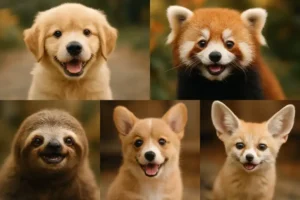
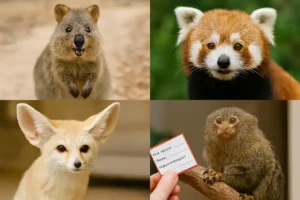
The first time I observed a red panda up close, I was struck by how different they are from giant pandas despite sharing a diet. These tree-dwelling creatures have rust-colored fur, a long ringed tail, and a face that looks perpetually curious. They’re about the size of a house cat, but their thick fur makes them appear larger.
Red pandas live in the mountain forests of the Himalayas and southwestern China, spending most of their time in trees. In my experience around these animals, they’re incredibly shy and mostly active during dawn and dusk. They eat bamboo like their larger namesake, but they also snack on fruits, acorns, and occasionally insects.
What’s heartbreaking is that fewer than 10,000 red pandas remain in the wild. Habitat loss from deforestation and agricultural expansion has fragmented their populations. They need continuous forest corridors to survive, and those are disappearing year by year.
The Vaquita: The World’s Rarest Marine Mammal
I’ll be honest—I’ve never seen a vaquita in person, and statistically, I probably never will. With fewer than 10 individuals left on Earth, this small porpoise is on the very edge of extinction. They live only in the northern Gulf of California, in a tiny area that’s shrinking due to illegal fishing.
Vaquitas are small, shy, and beautifully marked with dark rings around their eyes and mouths that give them an almost painted appearance. They’re about five feet long and prefer shallow, murky waters where they’re nearly impossible to spot even when present.
Most people don’t realize this until they learn about vaquitas: they’re not dying from hunting. They’re dying as bycatch in gillnets set for another endangered species, the totoaba fish. It’s a tragedy of unintended consequences, where illegal trade in one animal is erasing another entirely.
The Pika: A Tiny Mountain Survivor
As someone who has spent time in mountainous regions, I can tell you that pikas are one of the most endearing animals you’ll ever encounter. These small, round mammals look like a cross between a hamster and a rabbit, with no visible tail and rounded ears. They live in rocky mountain slopes at high elevations, often above the tree line.
Pikas are incredibly industrious. During summer, they gather vegetation and dry it in the sun, creating “haypiles” that they store under rocks for winter. I’ve watched them make dozens of trips in a single hour, their tiny mouths stuffed with grasses and wildflowers.
What worries me is that pikas can’t tolerate heat. They die when exposed to temperatures above 78°F for just a few hours. As climate change warms mountain habitats, pikas are literally running out of cool places to live. They’re moving higher up mountains, but eventually, there’s nowhere left to go.
Understanding Why These Animals Are Disappearing
In my experience around animals and conservation efforts, there are patterns to why rare species become endangered. It’s rarely just one thing. Usually, it’s a combination of pressures that build over decades until populations reach a tipping point.
Habitat Loss: The Primary Threat
Every rare animal I’ve studied shares one common challenge: their homes are disappearing. Forests are cleared for agriculture. Grasslands become subdivisions. Rivers are dammed. Mountains are mined. Animals that evolved in specific environments suddenly find themselves with nowhere to go.
The Javan rhino, for example, now exists in only one place on Earth—Ujung Kulon National Park in Indonesia. Fewer than 80 individuals remain. They’re not in danger because of what they lack, but because we’ve taken away 99% of their historical range.
Climate Change: The Invisible Pressure
As someone who has spent years observing animals, I’ve noticed behavioral changes that weren’t documented even a decade ago. Animals are migrating earlier. Hibernation patterns are shifting. Food sources are blooming at the wrong times.
For rare animals already struggling with small populations, climate change adds pressure they can’t absorb. The northern white rhinoceros is functionally extinct—only two females remain, both incapable of natural reproduction. Climate stress was one of many factors that prevented their recovery.
Human-Wildlife Conflict
Most people don’t realize this until they spend time in areas where humans and rare wildlife overlap: conflict is often born from fear and economic pressure, not malice. A farmer who loses crops to elephants faces genuine hardship. A herder who loses livestock to big cats faces financial ruin.
The Amur leopard, with fewer than 100 individuals left in the wild, lives in an area where human development continues to expand. Every road built fragments their territory. Every village established reduces their hunting grounds. They’re not hated—they’re just in the way of human survival.
What Makes a Species Worth Saving?
I’m going to be direct about something that bothers me in conservation circles: we shouldn’t have to justify an animal’s worth to protect it. But since resources are limited and decisions must be made, let me share what I’ve learned about why protecting rare animals matters beyond sentimentality.
Ecosystem Balance
In my experience around different habitats, removing even one species creates ripple effects. The saola, sometimes called the “Asian unicorn,” is so rare that scientists have only documented it a handful of times since 1992. We don’t fully understand its ecological role, but we know it exists in forests that support hundreds of other species.
When we protect saola habitat, we protect everything that lives there. That’s not coincidence—it’s interconnection.
Genetic Diversity
Every rare animal carries genetic information refined over millennia. The kakapo, a flightless parrot from New Zealand, has fewer than 250 individuals alive today. Each one represents a unique genetic line. If we lose them, we lose potential adaptations, disease resistances, and evolutionary solutions we haven’t even discovered yet.
As someone who has spent time with conservation breeding programs, I can tell you that bringing a species back from single-digit populations is extraordinarily difficult. The California condor was down to 27 birds in 1987. Today there are over 500, but genetic bottlenecks created vulnerabilities that will persist for generations.
| Species | Estimated Population | Primary Threat | Habitat |
|---|---|---|---|
| Vaquita | Less than 10 | Bycatch in fishing nets | Gulf of California |
| Javan Rhino | Approximately 70 | Habitat loss, disease | Java, Indonesia |
| Amur Leopard | Approximately 100 | Poaching, habitat fragmentation | Russian Far East |
| Kakapo | Approximately 250 | Predation, low reproduction | New Zealand islands |
| Red Panda | Under 10,000 | Deforestation, climate change | Himalayan forests |
How We Can Actually Help
As someone who has spent years observing animals and working with conservation efforts, I want to be realistic about what individual animal lovers can do. Grand gestures are wonderful, but consistent small actions create lasting change.
Support Evidence-Based Conservation Organizations
Not all conservation groups are equal. In my experience, the most effective organizations work directly with local communities, employ indigenous knowledge, and measure their impact transparently. Groups like the International Union for Conservation of Nature (IUCN), World Wildlife Fund’s targeted species programs, and smaller regional organizations often do remarkable work with limited resources.
Research before you donate. Look for organizations that publish their financials, work collaboratively with local populations, and focus on habitat protection rather than just individual animal rescue.
Reduce Your Environmental Footprint
I know this sounds abstract, but it matters. The choices we make about consumption directly affect animal habitats thousands of miles away. Palm oil production destroys orangutan habitat. Cheap beef drives Amazon deforestation. Unsustainable fishing depletes marine ecosystems.
Most people don’t realize this until they trace supply chains: our convenience is often their crisis. You don’t have to be perfect, but being thoughtful helps.
Educate Without Overwhelming
In my experience around people and animals, fear-based messaging creates paralysis, not action. When talking about endangered species with others—especially children—focus on what’s working, not just what’s failing.
The mountain gorilla population has increased from 620 in 1989 to over 1,000 today. The black-footed ferret was declared extinct in the wild in 1987, but captive breeding brought them back. The southern white rhino recovered from fewer than 100 individuals to over 18,000.
These aren’t miracles. They’re the result of sustained, thoughtful conservation work. That’s the message that inspires action.
Respect Wildlife Boundaries
As someone who has spent time in areas where rare animals live, I can’t stress this enough: observation from a distance is always better than close interaction. Many endangered species are endangered partly because human disturbance disrupts breeding, feeding, and migration patterns.
If you’re fortunate enough to travel to areas with rare wildlife, hire local guides who understand animal behavior. Follow regulations about viewing distances. Never feed wild animals. Don’t use flash photography. Your restraint might feel like missing out, but it’s actually profound respect.
The Lesser-Known Endangered Animals That Deserve Attention
In my experience around conservation efforts, certain animals get disproportionate attention while others disappear quietly. Let me introduce you to a few remarkable creatures you might not know are struggling.
The Saola: Asia’s Rarest Large Mammal
Discovered in 1992 in the mountains between Vietnam and Laos, the saola is so elusive that no researcher has ever observed one in the wild for more than a few moments. These forest antelopes have striking white facial markings and long, slightly curved horns. They live in dense evergreen forests and are so rare that population estimates are mostly guesswork—probably fewer than 100 individuals remain.
What makes the saola particularly vulnerable is that it was discovered already endangered. By the time scientists knew it existed, its habitat was already fragmented and hunting pressure was intense. It’s a reminder that some species are disappearing before we even know to protect them.
The Pangolin: The World’s Most Trafficked Mammal
The first time I learned about pangolins, I was struck by how bizarre and gentle they are. These scale-covered mammals curl into a ball when threatened, which unfortunately makes them easy to capture. All eight pangolin species are threatened with extinction, primarily because of demand for their scales in traditional medicine and their meat as a luxury food.
In my experience around conservation discussions, pangolins represent the challenge of changing cultural practices tied to wildlife use. The animals themselves are harmless—they eat ants and termites, waddle awkwardly on their hind legs, and have no defensive weapons. But they’re caught in a trade system that traffics hundreds of thousands of individuals annually.
The Axolotl: An Aquatic Marvel on the Brink
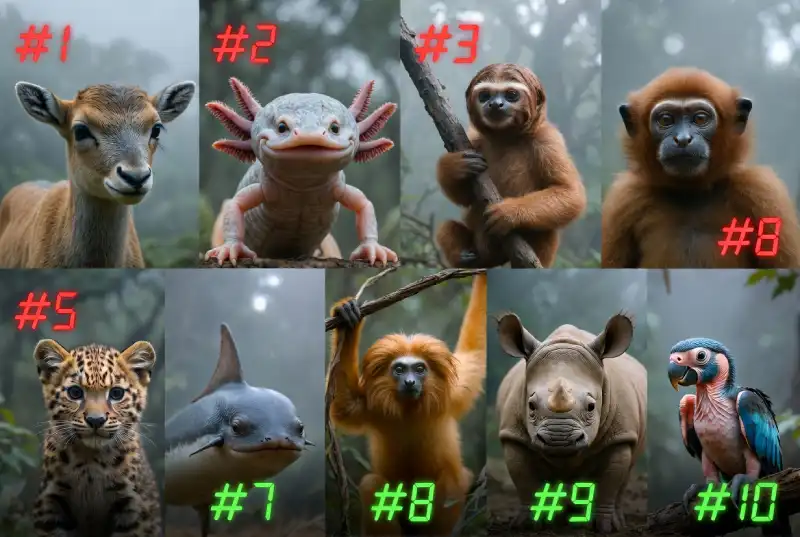
Most people know axolotls from pet stores or science labs, but wild axolotls are critically endangered. These Mexican salamanders with feathery external gills and perpetual smiles live naturally in only one lake system near Mexico City—and that lake system is vanishing.
As someone who has observed amphibians in various settings, I find axolotls fascinating because they never fully metamorphose into land-dwelling adults. They remain aquatic and retain juvenile characteristics throughout their lives. This unique biology has made them valuable for research, but it hasn’t protected their wild populations, which may number fewer than 1,000 individuals.
When Cute Becomes a Complication
In my experience around conservation funding and public attention, there’s an uncomfortable truth: cute animals get more support than less charismatic ones. The panda receives millions in conservation funding. The Chinese giant salamander—equally endangered—receives a fraction of that attention.
This is called “charismatic megafauna bias,” and it shapes which species survive. I’m not saying we should love rare animals less because they’re cute. I’m saying we should extend that love to the less photogenic species that are equally important.
The Yangtze finless porpoise is adorable with its permanent smile. The Sumatran rhino is stocky and prehistoric-looking. Both are critically endangered. Both need help. Our aesthetic preferences shouldn’t determine conservation priorities, but they often do.
What Success Looks Like
As someone who has spent years observing animals and conservation efforts, I want to end on realistic hope. Recovery is possible, but it requires decades of sustained effort, significant funding, and often difficult choices about how humans use land and resources.
The Southern White Rhino Recovery
In the late 1800s, fewer than 100 southern white rhinos existed, all in a single reserve in South Africa. Through protected areas, anti-poaching efforts, and careful management, the population rebounded to over 18,000. It’s not a permanent victory—poaching still threatens them—but it proves that with resources and commitment, recovery is achievable.
The Mauritius Kestrel: From 4 Birds to Stability
In 1974, the Mauritius kestrel was the rarest bird on Earth with only four known individuals. Through intensive captive breeding, habitat restoration, and predator control, the population now exceeds 400 birds. It’s still endangered, but it’s no longer on the immediate edge of extinction.
Most people don’t realize this until they study successful recoveries: it takes extraordinary effort to save a species once it reaches single digits. Prevention is always easier than rescue.
Living With the Reality of Loss
In my experience around animals, I’ve had to accept something difficult: we’re going to lose some species. Despite our best efforts, some populations are too small, too fragmented, or too pressured by forces beyond our control. The northern white rhino will likely disappear. The vaquita might already be functionally extinct by the time you read this.
This isn’t defeatism. It’s realism that should motivate us to fight harder for the species we can still save. The Sumatran tiger has fewer than 400 individuals, but that’s 400 reasons to act. The mountain gorilla was nearly gone, but careful protection brought them back from the edge.
Every rare animal still alive represents a choice we can make: to protect or to lose. That choice happens in policy decisions, consumer purchases, land use planning, and daily actions that seem too small to matter but collectively shape outcomes.
Frequently Asked Questions
What is the rarest cute animal in the world?
In my experience tracking endangered species, the vaquita porpoise is currently the rarest, with fewer than 10 individuals remaining. However, “rarest” changes as populations shift. Other critically rare animals include the Javan rhino with approximately 70 individuals and the northern white rhino, which is functionally extinct with only two non-breeding females alive.
Can I help endangered animals without donating money?
Absolutely. As someone who has spent years around conservation efforts, I’ve seen that awareness and behavioral changes matter enormously. You can help by making sustainable consumer choices, reducing your carbon footprint, educating others without overwhelming them, supporting political candidates who prioritize environmental protection, and respecting wildlife boundaries when traveling. Volunteer opportunities with local wildlife organizations also create meaningful impact without financial contribution.
Why do some cute animals get more conservation attention than others?
In my experience around conservation funding, this is called “charismatic megafauna bias.” Animals that are large, cute, or culturally significant tend to attract more public attention and funding. Pandas, tigers, and elephants receive millions in conservation support, while equally endangered but less charismatic species like salamanders, insects, or fish receive far less. This isn’t ideal, but conservation organizations work within this reality by using flagship species to protect entire ecosystems that benefit less popular animals.
Are captive breeding programs effective for rare animals?
As someone who has observed various breeding programs, I can say they’re effective in specific circumstances but not a universal solution. Programs work best when combined with habitat protection and threat reduction. The California condor, black-footed ferret, and Arabian oryx all benefited from captive breeding. However, genetic diversity loss, adaptation to captivity, and the enormous cost make it a last resort. Protecting wild populations before they crash is always preferable to captive recovery efforts.
What’s the biggest threat to rare cute animals?
In my experience around endangered species, habitat loss is the single largest threat, accounting for the endangerment of the vast majority of species. When forests are cleared, wetlands drained, or grasslands converted to agriculture, animals lose not just their homes but their food sources, breeding grounds, and migration corridors. Climate change is rapidly becoming a secondary universal threat, affecting even animals in protected areas by altering temperature ranges, precipitation patterns, and ecosystem timing.
How can I see rare animals ethically?
As someone who has spent time in areas with rare wildlife, ethical viewing requires planning and restraint. Work with reputable ecotourism operators who prioritize animal welfare, maintain appropriate distances, hire local guides who understand animal behavior, follow all regulations about viewing times and locations, never feed or attempt to touch wild animals, and minimize your environmental impact while traveling. Remember that not seeing an animal is sometimes the most respectful outcome—if they’re avoiding you, they’re behaving naturally.
Is it too late to save some endangered species?
In my experience around conservation efforts, honest answer is that some species are functionally extinct or so reduced that recovery is unlikely without extraordinary intervention. However, many species that seemed doomed have recovered when given protection and resources. The mountain gorilla, southern white rhino, and California condor all came back from populations under 100 individuals. As long as breeding populations remain and habitat can be protected or restored, there’s potential for recovery. The key is acting before populations reach single digits, which drastically reduces genetic diversity and recovery potential.
Final Thoughts on Loving Rare Animals
As someone who has spent years observing animals, I’ve learned that love without action is just sentiment. The rare animals I’ve shared with you today don’t need our pity—they need our protection, our restraint, and our willingness to change how we interact with the natural world.
You don’t have to quit your job and move to a conservation station. You don’t have to donate beyond your means. You don’t have to be perfect in your choices. But you can be thoughtful. You can be consistent. You can choose companies that minimize environmental impact, vote for policies that protect habitat, teach children to respect wildlife, and support organizations doing effective conservation work.
Most people don’t realize this until they spend time with animals: they’re not asking for much. Just space to exist, food to eat, and freedom from persecution. The rare animals disappearing around us aren’t failing—we’re failing them by prioritizing short-term human convenience over long-term ecological health.
But here’s what gives me hope: humans are capable of extraordinary care when we decide something matters. We’ve brought species back from the edge. We’ve restored habitats. We’ve changed laws, shifted cultural practices, and chosen preservation over profit. We can do it again for the animals still hanging on.
Every rare animal still alive is a story not yet finished. How that story ends depends partly on decisions made by governments and corporations, but it also depends on millions of individual choices made by people who care about animals. People like you.
See also: Cute Baby Animals You’ve Never Seen Before
Written by: Sarah Mitchell, Animal Care Writer at CuteAnimals.cc
Animal lover with hands-on experience observing and caring for animals across different environments.
Content reviewed using trusted animal-care references and real-life observation.
Disclaimer: Always consult a qualified veterinarian or animal care professional when needed. Every animal is unique. This article is for educational purposes and reflects observed animal behaviors and conservation information available through reputable sources. Conservation status and population numbers can change rapidly.
You May Also Like