How Cute Animals Survive in the Wild: Beauty Meets Brains
When you see a fluffy red panda waddling through bamboo forests or a wide-eyed slow loris clinging to a branch, your first thought is probably “adorable!” But here’s what most people don’t realize: those cute features aren’t just for melting hearts—they’re sophisticated survival tools honed by millions of years of evolution.
The same big eyes that make you say “aww” help nocturnal animals see predators in darkness. That fluffy fur that looks so cuddly? It’s engineered insulation that can mean the difference between life and death in harsh climates. Welcome to the fascinating intersection where cuteness meets survival strategy.
- The Science of Survival: Why "Cute" Features Exist
- Master Survivors: Cute Animals with Deadly Skills
- 1. Arctic Fox: Fluffy Cold-Weather Genius
- 2. Red Panda: The Bamboo-Eating Acrobat
- 3. Fennec Fox: Desert's Big-Eared Mastermind
- 4. Seal Pups: Adorable Marine Survivors
- 5. Slow Loris: Cute but Secretly Venomous
- 6. Pika: Mountain's Tiny Hay Farmer
- 7. Quokka: The Smiling Survivor
- 8. Baby Elephant: Size, Smarts, and Survival
- 9. Chinchilla: The Cloud-Soft Survivor
- 10. Pygmy Slow Loris: Tiny, Toxic, and Tenacious
- Survival Strategies Across Species: Common Themes
- When Cute Features Become Vulnerabilities
- Conservation: How to Help Cute Animals Survive
- The Future of Cute: Adaptation or Extinction?
- Lessons from Nature's Cutest Survivors
- Final Thoughts: Beauty, Brains, and Biodiversity
The Science of Survival: Why “Cute” Features Exist
Before we explore specific animals, let’s understand why certain traits evolved. Natural selection doesn’t care about Instagram likes—every physical feature serves a purpose in the brutal competition for survival.
Evolutionary Advantages of “Cute” Traits
Large Eyes
- Night vision enhancement: Bigger eyes capture more light, crucial for nocturnal hunters and prey
- Predator detection: Wide-set eyes provide broader visual fields to spot threats
- Depth perception: Forward-facing eyes help judge distances when leaping between trees or catching prey
Fluffy Fur
- Temperature regulation: Dense coats trap air for insulation in cold climates
- Predator deterrence: Animals appear larger and more intimidating when fluffed up
- Camouflage: Soft fur patterns blend with environments like snow or forest floors
- Water resistance: Layered fur keeps skin dry in wet habitats
Small Size
- Energy efficiency: Smaller bodies require less food to maintain
- Hiding ability: Compact animals can squeeze into protective spaces predators can’t reach
- Reproductive advantage: Shorter gestation periods and earlier maturity
Round Faces and Features
- Reduced aggression: Baby-like features can trigger non-aggressive responses in potential threats
- Social bonding: Promotes caregiving within species and protection from other animals
Master Survivors: Cute Animals with Deadly Skills
1. Arctic Fox: Fluffy Cold-Weather Genius
The Cute Factor: With cloud-like white winter fur and a bushy tail that resembles a plume, Arctic foxes look like animated stuffed animals.
The Survival Strategy: Don’t let the adorable appearance fool you—Arctic foxes are among the planet’s toughest survivors.
Temperature Mastery
- Survive temperatures as low as -70°F (-56°C) without shivering
- Possess the warmest fur of any mammal, with a dense undercoat and long guard hairs
- Use their bushy tails as built-in scarves, wrapping them around their faces while sleeping
- Small, rounded ears minimize heat loss (following Allen’s Rule in biology)
Hunting Intelligence
- Can hear lemmings moving beneath 2 feet of snow
- Use a specialized “pouncing” technique: leap high and dive nose-first through snow to catch prey
- Cache excess food in permafrost “freezers” for lean seasons
- Follow polar bears to scavenge their kills, demonstrating opportunistic intelligence
Seasonal Adaptation
- Change coat color from white (winter) to brown or gray (summer) for year-round camouflage
- Gain up to 50% more body weight in fall to prepare for winter
- Can reduce their metabolic rate to conserve energy during extreme cold
Actionable Insight: The Arctic fox teaches us about preparation and adaptability. Their seasonal weight gain and food caching mirror smart financial planning—save during abundance for inevitable scarcity.
2. Red Panda: The Bamboo-Eating Acrobat
The Cute Factor: Cinnamon-red fur, a ringed tail longer than their body, and a waddling walk make red pandas appear clumsy and vulnerable.
The Survival Strategy: These Himalayan natives are actually skilled climbers and resourceful omnivores.
Dietary Specialization
- Possess a carnivore’s digestive system but adapted to eat bamboo (like giant pandas)
- Have a modified wrist bone functioning as a “false thumb” to grip bamboo stalks
- Must eat 20-30% of their body weight daily due to poor bamboo digestion efficiency
- Supplement bamboo with eggs, insects, and small mammals when available
Arboreal Expertise
- Semi-retractable claws and flexible ankles allow them to descend trees headfirst
- Use their long, bushy tail for balance while climbing and as a blanket while sleeping
- Sleep 12-14 hours daily in trees, conserving energy and avoiding ground predators
- Can rotate their ankles 180 degrees to control descent on tree trunks
Temperature Regulation
- Thick fur and bushy tail protect against Himalayan cold
- Cover their faces with tails while sleeping to retain heat
- Prefer temperatures between 50-77°F, moving to higher or lower elevations seasonally
- Have fur on the soles of their feet for insulation and traction on icy branches
Communication and Defense
- Mark territory with scent glands and urine to avoid conflicts
- Stand on hind legs and hiss when threatened, appearing larger
- Generally solitary to reduce food competition in bamboo forests
Conservation Challenge: Red pandas are endangered with fewer than 10,000 in the wild, primarily due to habitat loss. Their survival strategy of specialization (bamboo diet) becomes a vulnerability when forests disappear.
3. Fennec Fox: Desert’s Big-Eared Mastermind
The Cute Factor: Enormous ears (up to 6 inches on a 2-3 pound body), cream-colored fur, and fox-like faces create an irresistibly adorable appearance.
The Survival Strategy: Those comically large ears are actually sophisticated cooling systems and hunting tools.
Thermoregulation Engineering
- Oversized ears contain extensive blood vessel networks that radiate excess body heat
- Pale fur reflects desert sunlight rather than absorbing it
- Thick fur on foot pads protects against scorching sand (up to 160°F surface temperatures)
- Nocturnal lifestyle avoids midday heat—body temperature drops during day to conserve energy
Water Conservation
- Can survive indefinitely without drinking water—extract all needed moisture from food
- Kidneys are highly efficient at concentrating urine to minimize water loss
- Pant to cool down rather than sweating, preserving precious bodily fluids
- Consume moisture-rich prey: insects, rodents, and desert plants
Hunting Superiority
- Those massive ears can detect insects and rodents moving underground
- Pinpoint prey location by triangulating sounds with directional hearing
- Lightning-fast pounce technique—leap and dig simultaneously to catch burrowing prey
- Omnivorous diet includes plants, eggs, reptiles, and birds, ensuring food security
Social and Shelter Strategies
- Live in family groups in underground dens up to 32 feet long
- Den systems have multiple entrances for escape routes
- Breed once annually, timing births for optimal resource availability
- Cooperative parenting increases kit survival rates in harsh environment
Adaptation Lesson: Fennec foxes demonstrate specialization for extreme environments. Every feature serves the dual purpose of beating desert heat while securing scarce resources.
4. Seal Pups: Adorable Marine Survivors
The Cute Factor: White fluffy coats, enormous dark eyes, and whiskered faces make seal pups look like plush toys.
The Survival Strategy: That cute appearance helps them survive their first crucial weeks of life.
Early Life Protection
- Born with white lanugo fur that provides camouflage on ice/snow
- White coats make them difficult for predators to spot from distance
- Some species are born on pack ice, immediately facing sub-zero temperatures
- Mother’s milk contains 40-50% fat (vs. 4% in human milk) for rapid blubber development
Rapid Development
- Pups can double their birth weight in just 4-7 days
- Develop a thick blubber layer that replaces fur insulation
- Learn to swim within hours to days of birth (species-dependent)
- Molt white coat after 2-4 weeks, revealing waterproof adult fur
Maternal Bond and Protection
- Mothers identify their pups among thousands by unique vocalizations
- Pups learn to recognize mother’s call within days of birth
- Nursing period varies: 4 days (hooded seals) to 6 weeks (harbor seals)
- Single-minded maternal care during nursing—mothers fast and lose significant weight
Aquatic Adaptation
- Can hold breath for increasingly longer periods as they mature
- Whiskers (vibrissae) detect fish movements in murky water
- Eyes adapted for underwater vision with protective membranes
- Can dive to impressive depths even as juveniles
Predator Awareness
- Remain motionless when separated from mothers (reduces predator detection)
- Learn to recognize predator shapes and sounds
- Polar bears, orcas, and sharks are primary threats
- Stay close to water for quick escape once mobile
Conservation Note: Climate change is reducing sea ice where ice-dependent seals give birth, making pups more vulnerable to storms and predation. Their cute appearance has driven marine mammal protection laws, but habitat loss remains a critical threat.
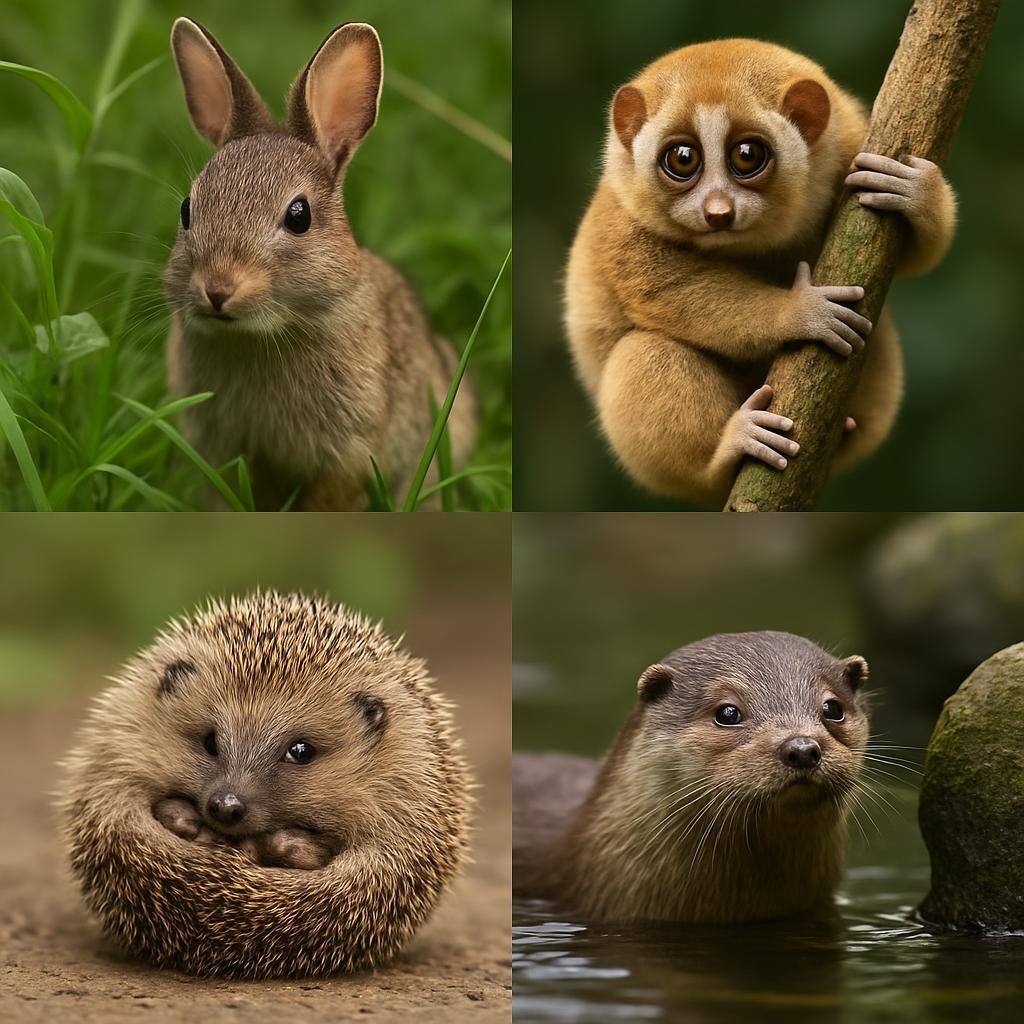
5. Slow Loris: Cute but Secretly Venomous
The Cute Factor: Enormous forward-facing eyes, soft dense fur, and slow, deliberate movements make slow lorises appear gentle and harmless.
The Survival Strategy: This is where cute becomes deadly—slow lorises are the world’s only venomous primate.
Venom Defense System
- Brachial glands in elbows secrete toxin (similar to cat allergen Fel-d1 protein)
- Lick glands and mix secretions with saliva to activate venom
- Bite delivers venom that causes painful swelling, necrosis, and anaphylactic shock
- Venom potent enough to deter most predators, including orangutans
- Mothers coat fur with venom before leaving infants alone
Stealth and Camouflage
- Slow movements prevent detection by predators and prey
- Can remain motionless for hours when threatened
- Brown/gray coloration blends with tree branches
- Nocturnal lifestyle reduces encounters with diurnal predators
Specialized Hunting
- Those large eyes provide excellent night vision for nocturnal foraging
- Hands adapted for powerful grip—can hang from branches for hours
- Diet includes tree sap, nectar, insects, and occasionally small birds
- Toothcomb (specialized lower teeth) used for grooming and extracting tree gum
Energy Conservation
- Slow metabolism reduces food requirements
- Can enter torpor (lowered metabolic state) during resource scarcity
- Deliberate movements minimize energy expenditure
- Sleep 12-14 hours daily in tree hollows or dense foliage
Social Strategy
- Solitary to reduce food competition
- Scent marking establishes territory without conflict
- Vocalizations include ultrasonic calls beyond human hearing range
- Males have larger territories overlapping several female ranges
Critical Conservation Issue: The illegal pet trade devastates slow loris populations. Their cute appearance makes them targets for wildlife traffickers who remove their teeth (often lethally) before selling them. Never support the exotic pet trade—these animals suffer immensely in captivity and their venom makes them dangerous pets.
6. Pika: Mountain’s Tiny Hay Farmer
The Cute Factor: Round bodies, tiny ears, dense fur, and squeaky vocalizations make pikas look like hamsters with shortened ears.
The Survival Strategy: These alpine specialists are master preparationists and climate-adapted engineers.
Food Storage Expertise
- Spend summer months gathering vegetation into “haypiles” weighing up to 60 pounds
- Select specific plants and dry them optimally before storing
- Position haypiles in protected rock crevices to prevent moisture and wind damage
- Actively maintain haypiles throughout summer, turning vegetation to prevent molding
- Single pika may make 100+ foraging trips daily during peak season
Cold Climate Adaptation
- Don’t hibernate—active year-round in harsh alpine environments
- Possess extremely dense fur (one of the warmest pelages of any mammal)
- Small, rounded ears minimize surface area and heat loss
- Live in rock talus fields where rocks provide insulation and protection
- Network of tunnels beneath rocks creates climate-controlled living space
Temperature Sensitivity
- Cannot tolerate temperatures above 78°F for extended periods
- Die if exposed to 86°F for just a few hours
- Retreat to cool rock crevices during warm days
- Increasingly vulnerable to climate change—moving to higher elevations as temperatures rise
Vocal Communication
- “Meep” or “eep” alarm calls warn neighbors of predators
- Different calls for different threat types (aerial vs. terrestrial)
- Can identify individual pikas by vocal signatures
- Territorial calls establish boundaries and reduce conflicts
No Water Drinking
- Extract all needed moisture from vegetation
- Specially adapted kidneys concentrate urine efficiently
- Particularly important in alpine environments where liquid water may be scarce
Climate Change Indicator Species: Pikas are considered sentinel species for climate change. As temperatures rise, they’re forced to higher elevations, eventually running out of habitat. Several populations have already gone extinct, making them cute but tragic symbols of warming impacts.
7. Quokka: The Smiling Survivor
The Cute Factor: Permanent “smile,” rounded ears, compact body, and friendly demeanor have made quokkas social media sensations.
The Survival Strategy: That smile masks tough adaptations for life in Australia’s harsh environments.
Water Conservation Master
- Can survive long periods without drinking by extracting moisture from vegetation
- Concentrated urine reduces water loss
- Browse native plants with high water content
- Can climb trees up to 5 feet to reach fresh leaves during dry seasons
Digestive Efficiency
- Like cows, quokkas are foregut fermenters with chambered stomachs
- Bacteria in stomach break down tough plant material
- Can extract maximum nutrition from low-quality vegetation
- Regurgitate and re-chew food (like cud) for better digestion
Predator Avoidance
- Primarily nocturnal to avoid heat and diurnal predators
- Use dense vegetation for cover
- On Rottnest Island (quokka stronghold), lack of natural predators allowed unusual boldness
- Can run quickly when threatened despite appearing clumsy
Reproductive Strategy
- Embryonic diapause—can pause pregnancy if environmental conditions deteriorate
- If joey dies, can rapidly resume pregnancy from paused stage
- Single joey per year but can mate immediately after giving birth
- Joeys stay in pouch for 6 months then continue nursing for 2 more months
Social Structure
- Live in small groups with established territories
- Use scent marking and vocalizations to communicate
- Males establish dominance hierarchies reducing physical conflicts
- Groups provide multiple eyes for predator detection
Tourism Impact: Their cuteness and friendliness created tourism on Rottnest Island, but human interaction brings risks. Feeding quokkas human food causes health problems and dependency. Selfie-seekers sometimes harass them. Their survival strategy of reduced fear works on an island without predators but would be deadly elsewhere.
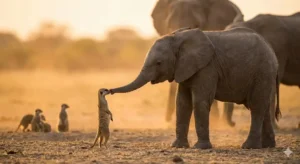
8. Baby Elephant: Size, Smarts, and Survival
The Cute Factor: Oversized ears, tiny tusks, trunk that they haven’t quite mastered, and playful behavior make elephant calves endearing.
The Survival Strategy: Born into highly intelligent, matriarchal societies, elephant calves benefit from communal protection and extensive learning.
Born into Protection
- Weigh 200-300 pounds at birth but are still vulnerable to predators
- Entire herd protects calves from lions, hyenas, and crocodiles
- Can walk within minutes of birth—critical for keeping up with migrating herds
- Stay close to mother’s side, learning by observation for years
Trunk Mastery
- Born with little trunk control—takes months to learn coordination
- Trunk contains 40,000+ muscles (more than entire human body)
- Practice constantly—watch calves swing trunks aimlessly while learning
- Eventually master drinking, eating, dust-bathing, and social touching with trunk
Social Learning
- Learn which plants to eat by watching mothers and herd members
- Matriarch (oldest female) holds decades of knowledge about water sources during droughts
- Calves observe conflict resolution, communication, and cooperation
- Play fighting teaches self-defense and social hierarchy navigation
Memory and Intelligence
- Exceptional memory helps remember water sources, migration routes, and individuals
- Can recognize hundreds of other elephants by sight, sound, and smell
- Remember locations of deceased herd members for years (possibly mourn)
- Problem-solving abilities include tool use and cooperative behavior
Physical Advantages
- Those big ears radiate heat—flapping them creates cooling breeze
- Thick skin protects against thorns, sun, and parasites
- Dust-bathing and mud-wallowing create sun protection and parasite control
- Feet have cushioned pads that spread weight, allowing silent movement despite size
Threats and Conservation:
- Poaching for ivory remains critical threat despite international bans
- Habitat loss forces human-elephant conflict
- Climate change increases drought severity, challenging herds’ survival
- Their long maturation (10-12 years) means populations recover slowly from losses
Survival Lesson: Elephants demonstrate that intelligence and social cooperation are powerful survival tools. Knowledge transmission across generations creates cultural learning unique among non-human animals.
9. Chinchilla: The Cloud-Soft Survivor
The Cute Factor: Impossibly soft fur (densest of any land mammal), large ears, bushy tail, and big eyes create a plush-toy appearance.
The Survival Strategy: That luxurious coat is precision-engineered for Andean mountain survival.
Fur Engineering
- Grow 60 hairs per follicle (humans have 1-2)
- Creates fur so dense that parasites like fleas cannot reach skin
- Provides insulation in high-altitude cold (Andes Mountains, 9,000-15,000 feet elevation)
- Takes dust baths instead of water baths—water would cause fungal growth in ultra-dense fur
Dust Bath Science
- Roll vigorously in volcanic ash or fine sand
- Dust particles absorb oils and moisture from fur
- Maintains fur loft and insulation properties
- Prevents matting that would reduce thermal efficiency
High-Altitude Adaptation
- Large lungs and hearts efficiently process thin mountain air
- Dense fur compensates for cold temperatures at elevation
- Active at dawn and dusk (crepuscular) to avoid temperature extremes
- Rocky terrain provides protection and insulation in crevices
Predator Evasion
- Exceptional jumpers—can leap up to 6 feet vertically
- Navigate rocky cliffs with remarkable agility
- Large eyes provide excellent vision in low light
- Large, rotating ears detect predators from multiple directions
Social Structure
- Live in colonies (up to 100 individuals in wild)
- Multiple eyes increase predator detection
- Warning vocalizations alert entire colony
- Social grooming strengthens bonds and distributes dust-bathing benefits
Reproductive Strategy
- Long gestation (111 days) produces well-developed offspring
- Kits born fully furred with open eyes and ability to move
- Can eat solid food within a week of birth
- Multiple generations may share burrows for warmth and protection
Conservation Crisis: Wild chinchillas are critically endangered due to fur trade (1900s exploitation nearly caused extinction). While domestic chinchillas are common pets, wild populations remain fragile. Their thick fur—their primary survival adaptation—ironically made them targets for human exploitation.
10. Pygmy Slow Loris: Tiny, Toxic, and Tenacious
The Cute Factor: Even smaller than regular slow lorises with proportionally larger eyes and orange/brown coloring.
The Survival Strategy: Combines venom, camouflage, and specialized dietary habits for survival.
Venom Delivery System
- (Similar to slow loris above, but worth reiterating given their uniqueness)
- Brachial gland secretion mixed with saliva creates toxic bite
- Grooming spreads venom onto fur as protection against predators
- Venom also has antimicrobial properties protecting wounds
Dietary Specialization
- Feed heavily on tree sap and gums (exudativory)
- Toothcomb scrapes bark to release sap
- Can digest compounds other primates cannot
- Supplement with insects, nectar, and occasional small vertebrates
Arboreal Mastery
- Strong grip allows them to hang motionless for hours
- Slow movements prevent branch shaking that could alert prey or predators
- Can move silently through canopy
- Sleep during day in tree hollows or dense vegetation
Sensory Adaptations
- Tapetum lucidum (reflective layer in eyes) enhances night vision
- Large eyes capture maximum light
- Excellent depth perception for judging distances between branches
- Sensitive whiskers detect nearby objects in darkness
Territorial Behavior
- Scent marking with urine establishes territory boundaries
- Both males and females are territorial
- Territories overlap minimally, reducing conflict
- Ultrasonic vocalizations communicate between individuals
Reproduction Strategy
- Slow reproductive rate—single offspring after 6-month gestation
- Mothers park infants on branches while foraging
- Venom coating protects parked infants from predators
- Extended parental care ensures offspring survival
Human Threat: Like slow lorises, pygmy slow lorises suffer from illegal pet trade. Their small size makes them appealing to traffickers. Habitat destruction compounds the problem. Education about their venomous nature may paradoxically help conservation by making them less desirable as pets.
Survival Strategies Across Species: Common Themes
After examining these diverse animals, clear patterns emerge in how “cute” features facilitate survival:
1. Thermal Regulation
The Challenge: Extreme temperatures (hot or cold) threaten survival.
Cute Solutions:
- Fluffy fur (Arctic fox, chinchilla): Dense coats trap insulating air
- Large ears (fennec fox): Radiate excess heat through extensive blood vessels
- Compact bodies (pika): Reduce surface-area-to-volume ratio, minimizing heat loss
- Bushy tails (red panda): Multi-purpose insulation and blanket
Human Application: These animals teach principles used in modern insulation and cooling technology. Biomimicry researchers study animal adaptations to improve human engineering.
2. Sensory Superiority
The Challenge: Detect predators, find food, and navigate in darkness.
Cute Solutions:
- Large eyes (slow loris, seal pups): Capture more light for night vision
- Oversized ears (fennec fox, chinchilla): Amplify sounds and provide directional hearing
- Whiskers (seals, quokkas): Detect vibrations and nearby objects without sight
- Reflective eye layer (many nocturnal species): Tapetum lucidum improves night vision
Survival Principle: Information is survival. Animals with superior sensory abilities detect threats sooner and find resources more efficiently.
3. Dietary Adaptation
The Challenge: Find reliable food in harsh or competitive environments.
Cute Solutions:
- Specialized digestion (red panda, quokka): Extract nutrition from difficult-to-digest materials
- Food caching (Arctic fox, pika): Store surplus during abundance for scarcity
- Dietary flexibility (fennec fox, elephant): Omnivorous diets reduce dependency on single food sources
- Water extraction (fennec fox, pika): Survive without drinking by metabolizing food moisture
Adaptation Lesson: Specialists (pandas eating bamboo) thrive in specific conditions but risk extinction when environments change. Generalists (foxes eating varied diets) survive more disruptions but may not dominate any single niche.
4. Predator Defense
The Challenge: Avoid becoming another animal’s meal.
Cute Solutions:
- Venom (slow loris): Chemical warfare as last-resort defense
- Camouflage (seal pups, Arctic fox): Blend with environment (white on snow/ice)
- Size deception (fluffed fur): Appear larger when threatened
- Speed and agility (chinchilla, quokka): Escape through difficult terrain
- Communal vigilance (elephant herds, pika colonies): Many eyes detect threats earlier
Defense Diversity: Different environments require different defense strategies. No single approach works everywhere, which is why evolution produced such variety.
5. Reproductive Strategy
The Challenge: Ensure offspring survive to reproduce themselves.
Cute Solutions:
- Rich milk (seals): Extremely high-fat content enables rapid growth
- Extended care (elephants, slow loris): Long parental investment increases survival probability
- Embryonic diapause (quokka): Pause pregnancy during unfavorable conditions
- Precocial offspring (chinchilla): Babies born well-developed, immediately mobile
- Communal protection (elephants, pikas): Group defenses multiple vulnerable young
Evolutionary Trade-off: Species balance offspring quantity versus parental investment. Many small offspring (most fish) versus few heavily-invested offspring (elephants) represent opposite strategies, both viable in different contexts.
When Cute Features Become Vulnerabilities
While these adaptations increase survival in natural habitats, they can become liabilities in human-altered landscapes:
The Dark Side of Adorable
1. Exotic Pet Trade Animals like slow lorises, fennec foxes, and sugar gliders suffer in illegal wildlife trafficking precisely because they’re cute. Their adorable appearance creates demand, but they suffer and often die in captivity.
The Reality:
- Slow lorises have teeth removed (often lethally) before sale
- Fennec foxes require specialized diets and environments homes can’t provide
- Many animals die during capture and transport
- Those that survive live in inappropriate conditions causing immense suffering
2. Climate Change Vulnerability Species adapted to specific temperature ranges face existential threats as climates shift.
Who’s at Risk:
- Pikas: Moving to higher elevations as mountains warm—eventually run out of mountain
- Arctic foxes: Shrinking sea ice and competing with red foxes moving north
- Seals: Ice-dependent species lose breeding platforms as Arctic ice melts
- Red pandas: Temperature-sensitive animals squeezed into smaller altitude bands
3. Habitat Loss Cute animals don’t stop agricultural expansion or urban development. As habitats shrink, populations decline regardless of adaptations.
Critical Losses:
- Red pandas lose Himalayan forests to deforestation
- Quokkas restricted to islands and tiny mainland pockets
- Elephants face human conflict as ranges overlap
- Chinchillas lost 90%+ of population to habitat destruction and hunting
4. Human Interaction Problems Habituation to humans can be deadly for wild animals. Quokkas on Rottnest Island lost fear of humans (no natural predators), making them vulnerable if transferred elsewhere or if predators are introduced.
Conservation: How to Help Cute Animals Survive
What You Can Do
1. Never Support Wildlife Trade
- Don’t buy exotic pets—especially cute ones likely wild-caught
- Don’t pay for photos with captive wild animals
- Report suspicious wildlife sales to authorities
- Educate others about suffering behind cute animal videos
2. Support Habitat Conservation
- Donate to organizations protecting specific habitats (rainforest trusts, ocean conservancies)
- Support indigenous land rights—indigenous-managed lands often have better conservation outcomes
- Choose products certified as habitat-friendly (FSC wood, Rainforest Alliance coffee)
- Reduce consumption overall—less demand means less habitat conversion
3. Address Climate Change
- Reduce personal carbon footprint (energy, transportation, diet)
- Support politicians prioritizing climate action
- Divest from fossil fuels if you have investments
- Advocate for renewable energy development
4. Promote Coexistence
- Support wildlife corridors connecting fragmented habitats
- Use deterrents rather than killing “nuisance” animals
- Keep pets contained to reduce predation on wildlife
- Secure trash to prevent wildlife dependence on human food
5. Educate and Advocate
- Share accurate information about wildlife needs
- Call out exploitation disguised as cute content
- Support science-based conservation policies
- Teach children to appreciate animals in natural contexts
Organizations Making a Difference
Species-Specific:
- Red Panda Network: Protects Himalayan forests
- Save the Elephants: Reduces human-elephant conflict
- International Union for Conservation of Nature (IUCN): Tracks species status
- Born Free Foundation: Fights exotic pet trade
Habitat-Based:
- Rainforest Trust: Protects critical habitats worldwide
- Wildlife Conservation Society: Works in 60 countries
- The Nature Conservancy: Protects lands and waters
- Ocean Conservancy: Protects marine ecosystems
The Future of Cute: Adaptation or Extinction?
Climate change is accelerating faster than evolution typically operates. Animals with slow reproductive cycles (elephants: 22-month gestation) cannot adapt quickly enough through natural selection.
Assisted Migration Controversies
Some scientists propose moving species to cooler climates as their current ranges become uninhabitable. This is controversial:
Potential Benefits:
- Saves species from certain extinction
- Establishes populations in suitable habitats
- Creates backup populations if original ranges fail
Potential Risks:
- Introduces species to ecosystems that didn’t evolve with them
- Could create invasive species problems
- Expensive and logistically complex
- May fail if we misunderstand habitat requirements
Genetic Rescue
Emerging technologies like CRISPR gene editing could theoretically help species adapt to changing conditions. This raises ethical questions:
- Should we genetically modify wild animals?
- Who decides which traits to modify?
- What unintended consequences might occur?
- Does this reduce pressure to address underlying problems (habitat loss, climate change)?
De-extinction Debates
Scientists can potentially resurrect extinct species using DNA from preserved specimens. This technology raises questions about priorities:
- Should resources go to bringing back extinct species or protecting living ones?
- Would resurrected species have appropriate habitats?
- Do we have ethical obligations to species we drove extinct?
Lessons from Nature’s Cutest Survivors
For Humans
1. Preparation Matters Like pikas caching vegetation and Arctic foxes storing food, preparing during abundance for inevitable scarcity is wise strategy—financial, emotional, and practical.
2. Adaptation is Continuous Animals that survived evolving challenges were flexible. Rigid strategies fail when conditions change. Developing multiple skills and approaches increases resilience.
3. Community Provides Protection Solitary survival is hard. Elephants, pikas, and seal colonies demonstrate that cooperation and information-sharing increase everyone’s chances.
4. Specialization Has Trade-offs Red pandas’ bamboo specialization works until bamboo forests disappear. In careers and life, over-specialization creates vulnerability. Maintain adaptability.
5. Information is Survival Superior sensory abilities help animals detect threats and opportunities sooner. In human terms: stay informed, develop awareness, and process information effectively.
Final Thoughts: Beauty, Brains, and Biodiversity
The animals we find cutest aren’t trying to be adorable—they’re trying to survive. Those big eyes, fluffy fur, and tiny ears are engineering solutions to environmental challenges, refined through millions of years of evolution.
Their cuteness creates opportunity: if we’re drawn to these animals, we’re more likely to care about their survival. Conservation organizations feature charismatic megafauna (pandas, elephants, seals) in fundraising precisely because people respond emotionally to cute animals.
But here’s the critical point: saving cute animals means saving entire ecosystems. Protect red pandas, and you protect Himalayan forests housing hundreds of other species. Save elephants, and you maintain African savanna ecosystems. Preserve Arctic foxes, and you protect tundra food webs.
Beauty meets brains in nature’s cutest survivors—and in those of us smart enough to ensure they continue surviving for future generations to appreciate.
What’s your favorite cute animal survival strategy? Share this guide and help others understand that adorable animals are also remarkable survivors deserving our protection.
You May Also Like