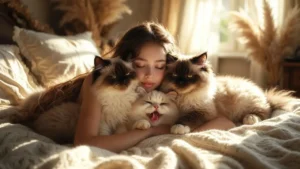
Cute Siamese Cat Personality Traits
If you’ve ever been chosen by a Siamese cat, you already know they’re not like other felines. These striking blue-eyed beauties don’t just share your home—they demand to be part of every moment of your day. They’ll follow you to the bathroom, commentate on your phone calls, and express very strong opinions about everything from dinner time to why you’re not paying them enough attention.
After working with countless Siamese cats and their devoted (sometimes exhausted) owners over the years, I can tell you that understanding their unique personality is the key to a harmonious relationship. These cats aren’t for everyone, but for the right person, they’re absolutely unforgettable companions who fill your life with conversation, mischief, and fierce loyalty.
What Makes Siamese Cats So Different?
Siamese cats are one of the oldest and most recognizable breeds in the world. Originating in Thailand (formerly Siam), they were treasured by royalty and temple guardians. This aristocratic history shows in their confident, demanding personalities—they truly believe they’re royalty, and they expect you to treat them accordingly.
But what really sets them apart is the intensity of everything they do. When a Siamese loves you, it’s all-consuming. When they want attention, they’re relentless. When they have something to say, everyone within earshot will hear it. There’s no halfway with these cats—they live at full volume, emotionally and vocally.
Breed Fact: Siamese cats are one of the most vocal breeds, capable of producing a wide range of sounds from soft chirps to loud, demanding yowls. According to the ASPCA, their vocalization is a key breed characteristic, not a behavioral problem—though it can certainly feel like one at 3 AM!
Understanding that these personality traits are hardwired into the breed helps you appreciate rather than fight against them. A Siamese cat who’s being demanding, vocal, and constantly underfoot isn’t misbehaving—they’re being exactly what centuries of breeding created them to be.
Core Siamese Personality Traits: What to Expect
Let me walk you through the personality characteristics that define this extraordinary breed. Some will delight you, some might challenge you, but all are part of the package deal when you welcome a Siamese into your life.
Extremely Vocal and Conversational
This is the trait everyone mentions first, and for good reason. Siamese cats are the chatty Cathys of the feline world. They don’t just meow—they have full conversations with you, complete with varied tones, volume changes, and what sounds suspiciously like actual words.
They’ll tell you when they’re hungry (repeatedly), comment on the bird outside the window, greet you when you come home, and narrate their activities throughout the day. Some owners swear their Siamese cats understand and respond to questions. Having worked with these cats for years, I wouldn’t argue against it.
Many pet parents don’t realize that trying to “quiet” a Siamese is fighting their nature. Instead, learn to interpret their different vocalizations. A short chirp means something different from a long, drawn-out yowl. Once you understand their language, it becomes communication rather than just noise.
Intensely People-Oriented and Affectionate
Siamese cats bond deeply with their people—often choosing one favorite person to shadow relentlessly. They’re not content to be in the same room; they want to be on you, near you, touching you at all times.
Expect your Siamese to follow you from room to room, supervise your activities (including showering and using the bathroom), sleep pressed against you at night, and become visibly distressed if you’re gone too long. This isn’t clinginess—it’s their love language.
I once worked with a family whose Siamese, Ming, would wait by the door when anyone left the house and refuse to eat until they returned. He’d greet them with loud complaints about being abandoned, then stick to them like glue for the next hour. That’s Siamese devotion in action.
Highly Intelligent and Easily Bored
Siamese cats are problem-solvers with memory and reasoning skills that sometimes feel almost canine. They can learn to open doors, turn on faucets, fetch toys, and even perform tricks. This intelligence makes them fascinating companions—and occasional headaches when they decide to “help” in ways you didn’t anticipate.
Their sharp minds need constant stimulation. A bored Siamese becomes a destructive Siamese. They’ll find entertainment by knocking things off shelves, unrolling toilet paper, opening cabinets, or inventing games you definitely won’t appreciate at 2 AM.
What You Can Do Right Now at Home
- Provide puzzle feeders and interactive toys: Make them work for treats to engage their problem-solving skills.
- Rotate toys weekly: Keep things novel to prevent boredom with the same old options.
- Teach tricks using positive reinforcement: Siamese excel at learning and enjoy the mental challenge plus attention from you.
- Create vertical spaces: Cat trees, shelves, and perches let them survey their territory and stay mentally engaged.
- Schedule daily play sessions: At least 15-20 minutes of active play helps burn energy and provides stimulation.
Demanding and Attention-Seeking
Siamese cats don’t understand the concept of “not right now.” When they want attention, they want it immediately, and they’ll escalate their demands until they get it. This can mean progressively louder meowing, standing on your keyboard, knocking things off your desk, or draping themselves across whatever you’re trying to do.
In my experience, this trait frustrates new Siamese owners the most. They feel manipulated or controlled by their cat. But here’s the thing—Siamese cats genuinely need more interaction than most breeds. Meeting this need prevents behavioral problems and creates a happier cat and owner.
Set aside specific times for focused interaction. When you give them your full attention for 15-20 minutes, they’re often more content to entertain themselves afterward. Ignoring them entirely just makes them try harder to get noticed.
Active, Athletic, and Playful
These aren’t lazy lap cats—well, they are lap cats, but only after they’ve burned off energy. Siamese are athletic and agile, capable of impressive jumps and acrobatic maneuvers. They retain their playful kitten energy well into adulthood and even their senior years.
They love chase games, especially interactive toys that mimic prey movement. Many Siamese will play fetch like dogs, returning toys again and again. They’re also climbers who appreciate access to high perches where they can observe their kingdom.
According to veterinary behaviorists and organizations like the American Veterinary Medical Association (AVMA), providing adequate physical activity is crucial for intelligent, high-energy breeds like Siamese to prevent anxiety and destructive behaviors.
Social with Other Pets (Usually)
Unlike many cats who prefer being the only pet, Siamese often enjoy having companions—especially other Siamese or similarly social breeds. They can form close bonds with dogs, other cats, and even play gently with cat-savvy children.
However, they can be bossy and territorial with pets who challenge their authority. They expect to be in charge and won’t hesitate to assert dominance. Proper introductions and ensuring all pets have their own resources (food bowls, litter boxes, sleeping spots) prevents conflicts.
Many Siamese owners find that having two Siamese cats prevents loneliness-driven behavioral issues when they’re at work. The cats keep each other company, play together, and seem generally happier in pairs.
Sensitive to Changes and Stress
For all their confidence and demands, Siamese cats are surprisingly sensitive to environmental changes and emotional atmospheres. They pick up on their owner’s stress, household tension, and disruptions to routine.
Moving homes, new pets, new babies, renovations, or even rearranged furniture can trigger stress responses including excessive vocalization, loss of appetite, hiding, or inappropriate elimination. They thrive on predictability and struggle more than some breeds with change.
When you must make changes, do it gradually. Maintain their feeding schedule, play routine, and attention patterns as much as possible. Extra reassurance during stressful times helps them adjust.
For more insights into understanding complex cat personalities, check out our animal behavior resources where we explore feline psychology in depth.
Siamese Personality Traits Compared to Other Breeds
Understanding how Siamese cats differ from other popular breeds helps set realistic expectations and appreciate their unique qualities.
| Personality Trait | Siamese | Persian | Maine Coon | British Shorthair |
|---|---|---|---|---|
| Vocalization | Very High (constant) | Very Low (quiet) | Moderate (chirps) | Low (occasional) |
| Affection Level | Extremely High (clingy) | High (lap cats) | High (friendly) | Moderate (reserved) |
| Energy Level | Very High | Low | Moderate-High | Low-Moderate |
| Independence | Very Low (needy) | Moderate | Moderate | High |
| Playfulness | Very High (lifelong) | Low | High | Moderate |
| Stranger Tolerance | Moderate (suspicious) | Low (shy) | High (friendly) | Moderate (reserved) |
| Trainability | Very High | Low | High | Moderate |
| Attention Requirements | Very High (demanding) | Moderate | Moderate-High | Low-Moderate |
Note: Individual cats vary within breeds. These are general tendencies based on breed standards and typical characteristics.
Is This Normal or Concerning? Understanding Siamese Behavior
Because Siamese cats are naturally more intense than other breeds, it can be hard to distinguish between “typical Siamese behavior” and actual problems. Let me help you understand what’s normal and what requires attention.
Normal Siamese Behaviors
- Constant Following: Your Siamese shadowing you everywhere is breed-typical bonding behavior, not separation anxiety (unless accompanied by destructive behavior when alone).
- Loud, Frequent Vocalization: Talking constantly, greeting you vocally, and narrating activities is normal. They’re communicating, not complaining (usually).
- Demanding Attention: Insisting on interaction, interrupting activities, and being persistent when they want something is typical Siamese assertiveness.
- Getting into Everything: Opening cabinets, investigating drawers, and “helping” with tasks demonstrates their intelligence and curiosity, not misbehavior.
- Selective Affection: Bonding intensely with one person while being cooler toward others is common—they’re one-person cats at heart.
When to Be Concerned
While Siamese cats are naturally intense, certain behavioral changes warrant professional attention:
⚠️ Red Flags Requiring Veterinary or Behavioral Help
- Sudden personality changes: A normally social Siamese becoming withdrawn, hiding excessively, or showing aggression can indicate illness or pain.
- Excessive vocalization with behavioral changes: If increased meowing is accompanied by litter box issues, appetite changes, or lethargy, see a vet immediately.
- Destructive behavior: Beyond typical curiosity—actual destruction, aggressive scratching, or obsessive behaviors suggest stress or inadequate enrichment.
- Inappropriate elimination: Urinating or defecating outside the litter box requires vet evaluation to rule out medical issues before addressing behavioral causes.
- Self-harm behaviors: Over-grooming to the point of bald patches, compulsive scratching, or other repetitive behaviors need professional intervention.
- Extreme separation distress: If your Siamese becomes destructive, stops eating, or shows signs of severe anxiety when alone, consult a veterinary behaviorist.
The Humane Society emphasizes that sudden behavioral changes in cats should always prompt veterinary evaluation, as cats often hide illness until it’s advanced.
Living Successfully with a Siamese: Practical Tips
After years of working with Siamese cats and their owners, I’ve learned that the key to harmony is working with their nature, not against it. Here’s how to create an environment where both you and your Siamese thrive.
Managing the Constant Vocalization
You won’t eliminate it, so focus on channeling and understanding it:
- Respond to communication, not demands: When your Siamese talks to you, acknowledge them verbally. This satisfies their need for interaction without rewarding demanding behavior.
- Learn their vocabulary: Different sounds mean different things. A short chirp is usually greeting or acknowledgment. Long, drawn-out yowls often indicate distress or strong desire for something.
- Address underlying needs: Excessive meowing can signal hunger, boredom, loneliness, or illness. Make sure basic needs are met before assuming it’s just chattiness.
- Don’t reward middle-of-night yowling: As tempting as it is to quiet them, responding to 3 AM demands teaches them that yowling works. Consistency is crucial.
- Provide enrichment before bed: A good play session and full meal before bedtime often reduces nighttime vocalization.
Satisfying Their Social Needs
Siamese cats need more interaction than most breeds. Ignoring this causes behavioral problems:
- Schedule quality time: Dedicate 20-30 minutes of focused interaction daily—play, grooming, or just sitting together.
- Consider a companion: If you work long hours, a second cat (ideally another Siamese or social breed) prevents loneliness.
- Create spaces near you: Put cat beds, perches, or heated pads near your workspace or favorite sitting spots so they can be near you without being on you constantly.
- Include them in activities: Siamese love being involved. Let them “supervise” while you cook, work, or do chores. Participation satisfies their need to be part of everything.
“A Siamese cat doesn’t want to be your pet—they want to be your partner, your roommate, your shadow. Once you accept that they’re not optional company but mandatory participants in your life, everything gets easier.”
Preventing Destructive Behavior
Bored, under-stimulated Siamese become destructive. Prevention strategies include:
- Rotate toys regularly: Keep a toy box and only leave out 3-4 toys at a time. Rotate weekly to maintain novelty.
- Provide appropriate scratching options: Multiple scratching posts in different locations, textures, and angles prevent furniture destruction.
- Create environmental enrichment: Window perches for bird-watching, fish tanks, or cat TV videos provide entertainment when you’re busy.
- Use puzzle feeders: Make meals interactive challenges that engage their problem-solving abilities.
- Cat-proof sensitive areas: Childproof locks on cabinets you don’t want opened, covers for stove knobs, and securing breakables prevents “helpful” destruction.
For more detailed strategies on enriching your cat’s environment, explore our comprehensive guides at CuteAnimals.cc where we cover everything from DIY enrichment to understanding feline psychology.
Real Life Story: Understanding Siamese Intensity
Let me share a story that perfectly illustrates what living with a Siamese really means.
Tom contacted me in desperation about his Siamese cat, Yuki. Tom worked from home and thought a cat would be perfect company. He’d grown up with independent barn cats and expected similar behavior. Instead, Yuki demanded constant attention, yowled during video calls, walked across his keyboard repeatedly, and would not leave him alone for even a bathroom break.
Tom felt trapped, frustrated, and was considering rehoming Yuki. He thought something was wrong with her—that she had severe separation anxiety or behavioral problems.
But Yuki’s behavior was completely normal for a Siamese. Once I explained this wasn’t a problem to fix but a personality to accommodate, Tom’s perspective shifted. We worked on:
- Creating a comfortable perch next to his desk where Yuki could be near him without disrupting work
- Scheduling 20-minute play sessions before important calls to tire her out
- Using interactive toys and puzzle feeders during his busiest work hours
- Accepting that Yuki would always be vocal and present, and that wasn’t a flaw
Six months later, Tom called Yuki his “coworker” and couldn’t imagine working without her supervision. He’d learned to appreciate her commentary, adjusted his schedule around her needs, and realized her intensity was actually devotion in disguise.
That’s the Siamese journey—from feeling overwhelmed to feeling chosen by an incredibly special companion who loves you with an intensity most cats can’t match.
Frequently Asked Questions
The Siamese Experience: Is It Right for You?
Living with a Siamese cat is not like living with any other cat. It’s louder, more demanding, more interactive, and infinitely more involved. They won’t let you ignore them, won’t give you privacy, and won’t accept being treated as optional members of the household.
But for people who want a true companion—a cat who greets them at the door, participates in daily life, has actual conversations, and loves with fierce, unwavering devotion—there’s nothing quite like a Siamese.
Before bringing home a Siamese, honestly assess your lifestyle. Do you have time for significant daily interaction? Can you handle constant vocalization? Are you prepared for a cat who needs you emotionally, not just physically? Will you provide adequate mental stimulation?
If you answered yes, prepare for one of the most rewarding cat relationships you’ll ever experience. If you’re hesitant, that’s okay—there are wonderful cats of every personality type, and choosing the right match matters more than falling for a beautiful breed that doesn’t suit your life.
Siamese cats aren’t for everyone. But for their people—the ones who appreciate their intensity, embrace their demands, and meet their needs—they’re absolutely everything.
Ready to learn more about understanding and caring for unique cat personalities? Visit CuteAnimals.cc for comprehensive guides on feline behavior, breed characteristics, and creating enriching environments for all types of cats.
🐾 Author Bio
Written by: Jackson Galaxy
Pet Care Writer at CuteAnimals.cc
Animal lover with hands-on experience in animal care, behavior, and training. Content created using research-backed knowledge and real animal owner experience. Specialized in helping cat owners understand breed-specific personalities and build strong, lasting bonds with their feline companions.

You May Also Like