Cute Animals That Live in Trees
Cute Animals That Live in Trees
Discover the Adorable Creatures Who Call the Canopy Home
Look up. Way up. In the branches above our heads exists an entire world of the most adorable creatures on Earth—animals perfectly designed for life among the leaves, with big eyes for navigating shadows, grippy hands for climbing, and fluffy tails for balance.
There’s something magical about tree-dwelling animals. Maybe it’s how they peer down at us with those enormous, curious eyes. Or how they leap between branches with impossible grace. Or simply how they’ve adapted to thrive in a vertical world most of us never think about.
After working with many animal enthusiasts and educators, I’ve noticed that tree-dwelling creatures spark something special in people—a sense of wonder at how life finds ways to flourish in unexpected places.
Whether you’re fascinated by the slow-motion charm of a sloth, the acrobatic talents of a sugar glider, or the wise gaze of a tarsier, this guide celebrates the cutest animals that call the treetops home—and shares what makes each one so extraordinary.
“Trees are not just homes for these animals—they’re entire ecosystems. The canopy provides food, shelter, safety from predators, and pathways for travel. For arboreal creatures, life without trees would simply be impossible.”
Why Some Animals Choose Life in the Trees
Before we meet our adorable tree-dwellers, let’s understand why certain animals evolved to live high above the ground. It’s not random—it’s brilliant survival strategy.
The Advantages of Arboreal Living
- Safety from ground predators: Many predators can’t climb—trees offer refuge
- Abundant food sources: Fruits, leaves, insects, and nectar are plentiful in canopies
- Less competition: Fewer animals can access resources high in trees
- Better temperature regulation: Breezes cool the canopy; dense leaves provide shade
- Efficient travel: Leaping between branches can be faster than navigating forest floors
According to conservation data from the Humane Society, protecting forest habitats is crucial because so many species depend entirely on trees for survival—not just for shelter, but for every aspect of their lives.
The Cutest Tree-Dwelling Animals on Earth
Now let’s meet the stars of the canopy—animals so adorable they’ve captured hearts worldwide.
| Animal | Native Region | Cuteness Factor | Special Adaptation |
|---|---|---|---|
| Koala | Australia | Fluffy ears, teddy bear face | Fingerprints for grip |
| Sugar Glider | Australia, New Guinea | Huge eyes, tiny size | Gliding membrane |
| Red Panda | Eastern Himalayas | Fox-like face, fluffy tail | False thumb for bamboo |
| Sloth | Central/South America | Permanent smile, slow movement | Hooked claws |
| Tarsier | Southeast Asia | Enormous eyes, tiny body | Eyes bigger than brain |
| Squirrel | Worldwide | Bushy tail, cheek pouches | Rotating ankles |
| Tree Kangaroo | New Guinea, Australia | Teddy bear looks | Padded feet, curved claws |
| Slow Loris | Southeast Asia | Round face, huge eyes | Strong grip (can hang for hours) |
For more adorable animal discoveries, explore our cute animal care guides.
Meet the Stars: Adorable Tree-Dwellers Up Close
🐨 Koalas: The Sleepy Eucalyptus Huggers
With their fluffy ears, button noses, and perpetually drowsy expressions, koalas look like living teddy bears. These Australian icons spend up to 22 hours a day sleeping, wedged into tree forks with remarkable stability.
Koala Quick Facts:
- Sleep 18-22 hours daily (digesting tough eucalyptus takes energy)
- Have fingerprints nearly identical to humans
- Baby koalas (joeys) live in their mother’s pouch for 6 months
- Eat 1-2 pounds of eucalyptus leaves daily
In my experience, people are always surprised to learn that koalas aren’t actually bears—they’re marsupials! Their closest relative is the wombat, not any bear species.
🦥 Sloths: The Masters of Slow Motion
Nothing embodies tree life quite like the sloth. These gentle creatures move so slowly that algae grows on their fur, providing camouflage among the leaves. Their permanently upturned mouths make them look like they’re always smiling.
Two-Toed Sloths
- Slightly larger and faster
- More active at night
- Eat leaves, fruits, and insects
- Can swim surprisingly well
Three-Toed Sloths
- Smaller and even slower
- Can rotate heads 270 degrees
- Primarily eat leaves
- Descend to ground once weekly
The ASPCA notes that while sloths have become popular on social media, they should never be kept as pets—they have extremely specialized diets and needs that cannot be met in home environments.
🐿️ Sugar Gliders: Tiny Flying Squirrels
Sugar gliders might be the most adorable animals on this list. These tiny marsupials have enormous dark eyes, soft gray fur, and a membrane between their legs that allows them to glide up to 150 feet between trees.
- Size: Only 5-6 inches long (plus a matching-length tail)
- Weight: 4-5 ounces—lighter than a baseball
- Lifespan: 10-15 years in proper care
- Social needs: Must be kept in pairs or groups (extremely social)
⚠️ Important Note About Sugar Gliders as Pets
While sugar gliders can legally be kept as pets in many areas, they require:
- Large, tall enclosures with climbing opportunities
- Specialized diets (not just fruit—they need protein and calcium)
- Companionship (never keep just one—they become depressed)
- Nocturnal schedules (they’re active at night and will bark)
- Exotic vet care (not all vets treat sugar gliders)
Many pet parents don’t realize the commitment involved. Research extensively before considering one.
🦊 Red Pandas: The Original Pandas
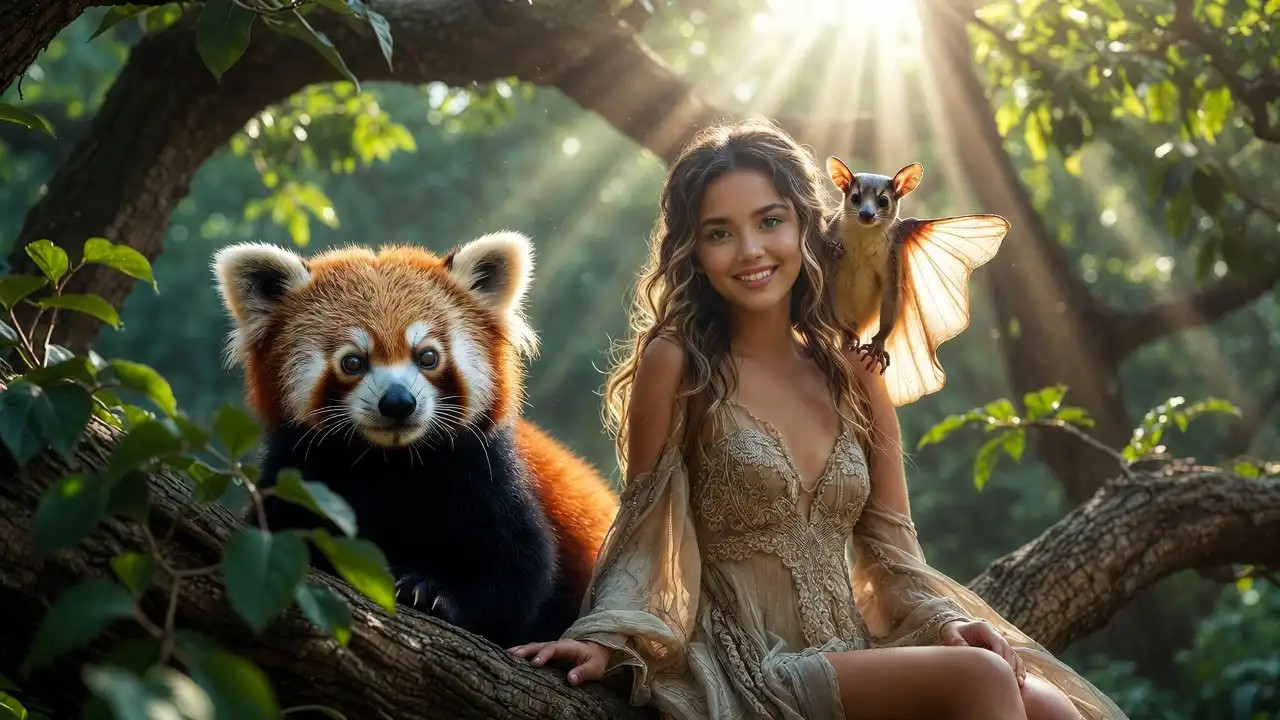
Before giant pandas stole the spotlight, red pandas were simply called “pandas.” These fox-like creatures with russet fur, masked faces, and luxuriously fluffy tails spend most of their lives in trees.
Red pandas are:
- Not related to giant pandas (or bears, or raccoons—they’re in their own unique family)
- Bamboo specialists who eat 20-30% of their body weight daily
- Excellent climbers who descend trees headfirst (rare among mammals)
- Endangered with fewer than 10,000 remaining in the wild
According to the American Veterinary Medical Association, habitat protection is the most critical factor in red panda conservation—these animals cannot adapt to deforested environments.
👀 Tarsiers: All Eyes, All Adorable
If you’ve ever seen a tarsier, you never forget those eyes. Each eyeball is as large as their entire brain—the largest eye-to-body ratio of any mammal. These tiny primates can rotate their heads almost 180 degrees in each direction.
🐾 Fascinating Tarsier Facts
- Their eyes cannot move in their sockets—that’s why they rotate their heads
- They’re the only fully carnivorous primates (eating insects, birds, and lizards)
- They can leap 40 times their body length
- They communicate in ultrasonic frequencies humans can’t hear
- Tarsiers are extremely sensitive to stress—touching them can be fatal
For more incredible animal facts, visit our animal behavior tips.
More Adorable Tree-Dwellers You’ll Love
Tree Kangaroos
Yes, kangaroos that live in trees! These fluffy, bear-like marsupials from New Guinea and northern Australia have adapted to climb with strong forelimbs, padded feet, and curved claws. They can jump 30 feet down from trees without injury.
Slow Lorises
With their round faces and huge, reflective eyes, slow lorises look like living stuffed animals. But don’t let the cuteness fool you—they’re the world’s only venomous primates! A gland on their arms produces toxin they lick before biting.
Flying Squirrels
Found on multiple continents, flying squirrels glide between trees using membrane “wings” similar to sugar gliders. Some species in Asia grow large enough to glide 300+ feet in a single leap.
Kinkajous
These golden-furred creatures from Central and South American rainforests have prehensile tails, huge eyes, and a love for honey (they’re sometimes called “honey bears”). They’re related to raccoons but look more like tiny, fluffy monkeys.
Common Squirrels
We can’t forget the tree-dwellers in our own backyards! Whether red, gray, or fox squirrels, these bushy-tailed acrobats are engineering marvels—able to jump 10 times their body length and rotate their ankles 180 degrees to climb down headfirst.
Adaptations That Make Tree Life Possible
What makes these animals so successful in the canopy? Evolution has given them remarkable tools.
| Adaptation | How It Helps | Animals With This Feature |
|---|---|---|
| Prehensile tails | Acts as a fifth limb for gripping | Kinkajous, some monkeys, opossums |
| Gliding membranes | Travel between distant trees | Sugar gliders, flying squirrels |
| Rotating ankles | Climb down trees headfirst | Squirrels, red pandas |
| Huge eyes | See in dim forest light | Tarsiers, slow lorises, sugar gliders |
| Curved claws | Grip bark and branches | Sloths, koalas, tree kangaroos |
| Opposable thumbs | Grasp branches precisely | Primates, koalas, opossums |
Conservation: Protecting Our Tree-Dwelling Friends
Many of the cutest tree-dwelling animals face serious threats. Deforestation, climate change, and illegal pet trade are pushing species toward extinction.
How You Can Help
- Support habitat conservation: Donate to organizations protecting rainforests
- Never buy wild-caught exotic pets: This drives poaching and trafficking
- Choose sustainable products: Look for certified palm oil, paper, and wood
- Plant native trees: Even in your backyard, you’re creating habitat
- Spread awareness: Share what you learn with others
The American Kennel Club and other animal organizations emphasize that responsible pet ownership extends to wildlife too—supporting conservation efforts helps ensure these amazing creatures survive for future generations to admire.
Frequently Asked Questions
What is the cutest animal that lives in trees?
Cuteness is subjective, but sugar gliders, koalas, and red pandas consistently top the list. Sugar gliders win hearts with their enormous eyes and tiny size. Koalas charm everyone with their teddy bear appearance and sleepy nature. Red pandas capture attention with their fox-like faces and luxurious tails. Sloths also rank high for their permanent “smiles” and gentle demeanor. Really, all tree-dwelling creatures have their own unique charm!
Can you keep tree-dwelling animals as pets?
Some tree-dwellers can legally be kept as pets (sugar gliders, certain squirrels), but legality varies by location—always check local laws. More importantly, most require specialized care that’s difficult to provide at home. Sugar gliders need companionship, specific diets, and large enclosures. Slow lorises and tarsiers should NEVER be pets—they suffer severely in captivity. Koalas, sloths, and red pandas cannot legally be kept as pets and require zoo-level care. If you’re drawn to exotic pets, research extensively and consider whether you can truly meet their needs.
Why do so many cute animals have big eyes?
Large eyes serve practical purposes for tree-dwellers: they gather more light for seeing in dim forest canopies, especially for nocturnal species like tarsiers and slow lorises. But there’s a human psychology angle too—we’re hardwired to find big eyes adorable because they remind us of human babies (this is called neoteny). Animals with large, forward-facing eyes trigger our nurturing instincts. So when you see a tarsier’s enormous eyes and feel your heart melt, that’s millions of years of evolution at work!
Do sloths really only come down from trees once a week?
Yes! Three-toed sloths descend to the forest floor approximately once a week—solely to defecate. This behavior is actually mysterious to scientists because it’s incredibly dangerous for sloths (they’re vulnerable to predators on the ground). Current theories suggest it may help fertilize their home trees, maintain moth populations that live in their fur, or serve social signaling purposes. Two-toed sloths descend more frequently. Despite the risks, this weekly ritual has persisted through evolution.
Are koalas dangerous?
Despite their cuddly appearance, koalas can be dangerous if threatened. They have sharp claws for climbing that can cause serious scratches, and they will bite if stressed or cornered. Wild koalas should never be approached or touched. Additionally, koalas carry Chlamydia bacteria (a different strain than the human STI) that can potentially be transmitted. In sanctuaries where koala handling is permitted, trained staff supervise all interactions. Bottom line: admire from a distance and respect that wild animals—even adorable ones—are not toys.
What tree-dwelling animals can I see in my backyard?
Depending on your location, you might see: squirrels (nearly everywhere with trees), opossums (North America), flying squirrels (nocturnal, often unseen), raccoons (though they’re not strictly arboreal), and various bird species. To attract more tree-dwelling wildlife: plant native trees and shrubs, provide water sources, install nest boxes appropriate for your region’s species, and reduce or eliminate pesticide use. Even urban backyards can host surprising wildlife if you create welcoming habitat!
Which cute tree animals are endangered?
Many beloved tree-dwellers face conservation threats: Red pandas (endangered—fewer than 10,000 wild), koalas (vulnerable—populations declining from disease and habitat loss), several slow loris species (vulnerable to endangered—heavily trafficked for pet trade), Philippine tarsiers (near threatened), and multiple tree kangaroo species (endangered). Deforestation is the primary threat for most species. Supporting rainforest conservation, avoiding exotic pets from wild populations, and choosing sustainable products all help protect these precious animals.
Final Thoughts: Celebrating Life in the Canopy
The world’s tree-dwelling creatures remind us that nature has found countless creative ways to thrive. From the slow-motion grace of sloths to the explosive leaps of tarsiers, from the cozy eucalyptus naps of koalas to the midnight glides of sugar gliders—these animals have mastered an environment most creatures could never survive.
And they’ve done it while being absolutely, impossibly adorable.
What strikes me most about these creatures is their perfect adaptation. Every oversized eye, every curved claw, every fluffy tail serves a purpose. Evolution has shaped them precisely for life among the branches—and we get to admire the beautiful results.
Whether you’re lucky enough to see these animals in the wild, visit them in ethical sanctuaries, or simply learn about them from afar, I hope you’ll carry a new appreciation for the incredible creatures who call the treetops home.
For more heartwarming animal content, explore our trusted pet care resources—and keep looking up. Magic lives in the branches.
Every tree is a universe. Every branch, a home. Every adorable creature living there, a miracle of adaptation. 🌳💚
📋 Disclaimer
This content is for educational and entertainment purposes only. Many tree-dwelling animals are protected species that cannot legally be kept as pets. Always check local regulations, support conservation efforts, and never purchase wild-caught animals. If you encounter injured wildlife, contact local wildlife rehabilitation services.
🐾 Author Bio
Written by: Jackson Galaxy
Pet Care Writer at CuteAnimals.cc
Animal lover with hands-on experience in animal care, behavior, and education. Jackson has spent years learning about creatures from all corners of the world and loves sharing the wonder of wildlife with fellow animal enthusiasts.
Content created using research-backed knowledge and real animal lover experience to bring you accurate, heartfelt information about the world’s most adorable creatures.
You May Also Like