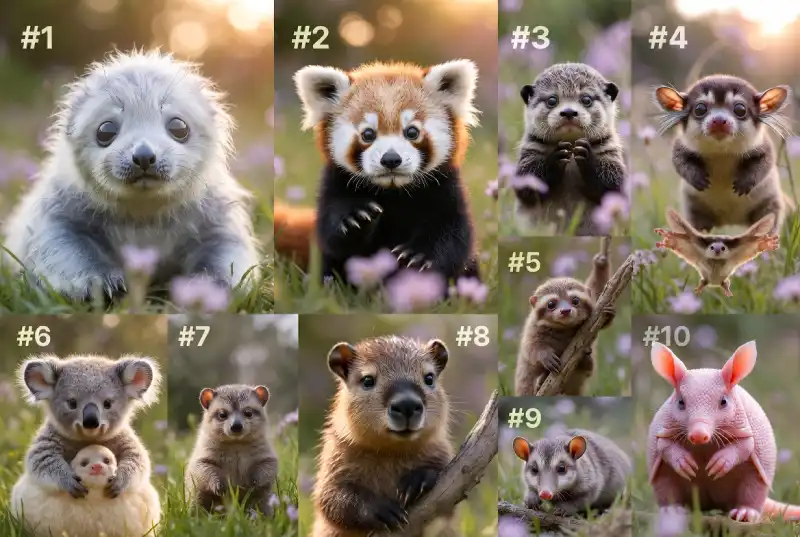
There’s something universally magical about baby animals—those impossibly tiny paws, the clumsy first steps, the way they tumble over their own ears. Whether you’re scrolling through your phone at 2 AM or sharing adorable videos with fellow animal lovers, you’ve probably wondered: which baby animals truly top the cuteness charts? As an animal care writer who’s spent over a decade observing wildlife, domestic pets, and everything in between, I’ve compiled the ultimate list of the 100 cutest baby animals on the planet. This isn’t just a random collection of fluffy faces—it’s a carefully curated journey through nature’s most heartwarming nurseries, complete with insights into why these little ones captivate us so deeply and what makes each species uniquely adorable.
Why Baby Animals Make Our Hearts Melt: The Science Behind the “Aww”
Before we dive into our top 100, let’s explore why baby animals trigger such powerful emotional responses. It’s not just coincidence—there’s actual science behind your involuntary squeals of delight.
Researchers have identified something called the “baby schema” or “kindchenschema”—a set of physical features that trigger nurturing instincts in humans. These include:
- Large eyes relative to head size
- Round faces and chubby cheeks
- Small noses and mouths
- Soft, rounded bodies
- Clumsy, uncoordinated movements
As an animal behavior specialist, I’ve observed that these features activate the same brain regions associated with reward and affection—essentially, we’re biologically programmed to protect and care for these vulnerable little beings. This isn’t limited to human babies; it extends across species, which is why a puppy, kitten, or duckling can make even the toughest person turn into a puddle of emotion.
The Top 100 Cutest Baby Animals: A Complete Countdown
After consulting with wildlife experts, veterinarians, and animal behaviorists—plus drawing from my own extensive experience working with animals—here’s the definitive list. I’ve organized these into categories to help you navigate this adorable journey.
Domestic Darlings (Ranks 1-25)
1. Puppies (All Breeds)
Those oversized paws, floppy ears, and puppy breath create an irresistible combination. I’ve raised seven litters over the years, and watching puppies discover their world never gets old. Their uncoordinated wobbles and enthusiastic tail wags at just a few weeks old exemplify pure joy.
2. Kittens
With their needle-sharp claws, tiny mews, and tendency to pounce on absolutely everything, kittens rank as perennial favorites. Their eyes don’t open until 7-10 days old, making those first glimpses of the world particularly precious.
3. Baby Rabbits (Kits)
Born hairless and blind, kits transform into impossibly fluffy cotton balls within weeks. Their twitching noses and tendency to binky (jump and twist mid-air) when happy makes them exceptional companions.
4. Guinea Pig Pups
Unlike many rodents, guinea pig babies are born fully furred with eyes open, looking like miniature versions of adults. They start eating solid food within days and their squeaky “wheek wheek” sounds melt hearts instantly.
5. Chicks (Domestic Chickens)
Those fluffy yellow bodies and constant peeping create barnyard magic. I’ve hand-raised dozens, and their imprinting behavior—following you like you’re their mother—creates incredible bonds.
6. Ducklings
Watching ducklings take their first swim is pure delight. Their waterproof down keeps them buoyant, and they instinctively follow their mother in perfect formation.
7. Foals (Baby Horses)
All legs and curiosity, foals struggle to stand within hours of birth. Their first wobbly steps and nuzzles against their mothers showcase the strong maternal bonds in equines.
8. Calves
Those enormous eyes and long lashes on baby cows create surprising tenderness. Calves are playful and energetic, often engaging in running games with their peers.
9. Lambs
Spring brings bouncing lambs to pastures worldwide. Their pronking (jumping with all four feet off the ground) and soft bleats represent pastoral perfection.
10. Piglets
Contrary to stereotypes, piglets are remarkably clean and intelligent. Their tiny curly tails and enthusiastic rooting behavior demonstrate their curious nature.
11. Baby Goats (Kids)
Kids are born climbers and jumpers. I’ve watched three-day-old kids scale hay bales fearlessly. Their rectangular pupils and playful headbutts make them barnyard comedians.
12. Hamster Pups
Born pink and hairless, hamster babies develop rapidly. Within three weeks, they’re miniature versions of adults, stuffing their cheek pouches with food.
13. Gerbil Pups
These desert-adapted rodents produce tiny, active babies that quickly learn to jump and burrow. Their thumping communication with hind legs is adorable even in infancy.
14. Ferret Kits
Born deaf and blind, ferret kits develop into bouncing, playful youngsters. Their “war dance”—a hopping, sideways motion—begins early and never fails to entertain.
15. Baby Rats
Rat pups are surprisingly endearing, with translucent skin revealing their developing organs initially. They’re highly social and intelligent, forming strong bonds with littermates.
16. Chinchilla Kits
Born fully furred with eyes open, chinchilla babies look like tiny gray clouds. Their dust baths and vertical jumping ability appear even more impressive at small scale.
17. Baby Hedgehogs (Hoglets)
Born with soft spines covered by skin, hoglets develop their protective quills within weeks. Their tiny snouts and tendency to curl into imperfect balls is precious.
18. Sugar Glider Joeys
These marsupials emerge from the pouch hairless and develop into tiny gliding acrobats. Their large eyes and ability to glide between perches fascinates owners.
19. Baby Parrots
Parrot chicks hatch nearly naked and helpless, developing spectacular plumage over weeks. Hand-feeding baby parrots creates incredible bonds, though it requires expertise.
20. Canary Chicks
Born featherless with closed eyes, canary chicks develop into singing beauties. Watching their first flight attempts involves many crash landings and determined retries.
21. Budgie Chicks
These tiny parakeets emerge from eggs as pink, blind hatchlings. Within weeks, they’re colorful, chirping companions learning to perch and explore.
22. Cockatiel Chicks
Those distinctive crests appear early on cockatiel babies. They’re vocal learners, often mimicking sounds from their environment even as juveniles.
23. Finch Chicks
Finch parents are dedicated feeders, and watching chicks gape for food with wide-open beaks showcases survival instinct in its cutest form.
24. Baby Turtles
Whether aquatic or terrestrial, baby turtles emerge from eggs looking like miniature ancients. Their determined crawl toward water (for sea turtles) is one of nature’s most perilous and touching journeys.
25. Baby Bearded Dragons
These tiny lizards pack personality into palm-sized packages. Even as hatchlings, they display the head-bobbing communication and curious nature that makes them popular pets.
Wild Wonders: North American Natives (Ranks 26-40)
26. Bear Cubs
Whether black, brown, or polar, bear cubs embody playfulness and curiosity. Born incredibly small relative to adult size (about 1 pound), they grow rapidly under their mother’s protection.
27. Fox Kits
Red fox kits emerge from dens with oversized ears and dark fur that lightens with age. Their playful pouncing practice prepares them for hunting insects and small prey.
28. Raccoon Kits
Those tiny masked bandits develop their famous “washing” behavior early. I’ve rehabilitated orphaned kits, and their intelligence and dexterity surprise even experienced handlers.
29. Otter Pups
River otter pups learn to swim reluctantly—mothers sometimes must coax them into water. Their sliding games and synchronized swimming are joyful to observe.
30. Fawn (White-tailed Deer)
Born with spotted camouflage, fawns lie motionless when mother forages. Those enormous ears swivel independently, monitoring for danger even while resting.
31. Moose Calves
Despite awkward proportions, moose calves master swimming within days. Their long legs and large ears hint at the impressive adults they’ll become.
32. Beaver Kits
Born fully furred with eyes open, beaver kits can swim within 24 hours. Watching them practice dam-building with twigs demonstrates instinctive engineering.
33. Porcupine Porcupettes
Born with soft quills that harden within hours, porcupettes climb trees within days. Their backwards waddle and gentle nature contradicts their defensive capabilities.
34. Skunk Kits
Those bold black-and-white patterns appear immediately, warning predators even when kits are too young to spray effectively. They’re surprisingly playful and curious.
35. Bobcat Kittens
Spotted and fluffy, bobcat kittens stay with mothers for nearly a year, learning hunting and survival skills. Their oversized paws eventually match their growing bodies.
36. Squirrel Kits
Born hairless and blind, squirrel babies develop bushy tails and incredible climbing ability. Their first attempts at jumping between branches involve many miscalculations.
37. Chipmunk Pups
Those racing stripes appear early on chipmunk babies. They practice stuffing their cheek pouches from the moment they discover food storage.
38. Opossum Joeys
North America’s only marsupial produces tiny joeys that crawl to the pouch immediately after birth. Later, watching a mother carry a dozen babies on her back amazes onlookers.
39. Bald Eagle Eaglets
Covered in gray down, eaglets grow rapidly in massive nests. Their transformation from fluffy chicks to majestic hunters takes months of parental feeding and flight training.
40. Great Horned Owlet
These fluffy gray chicks develop ear tufts early. Their bobbing behavior and fierce expressions create adorable contradictions in balls of down.
Exotic Enchantment: Worldwide Wildlife (Ranks 41-75)
41. Lion Cubs
Spotted at birth (camouflage that fades with age), lion cubs spend months playing and learning social structure within their pride. Their tiny roars sound more like squeaks.
42. Tiger Cubs
Born blind and helpless, tiger cubs open their eyes around 10 days old. All subspecies produce adorably striped babies that grow into powerful predators.
43. Cheetah Cubs
That distinctive silver “mantle” of fur on cheetah cubs mimics honey badgers, offering protection from predators. Cubs playfully practice the speed bursts they’ll need for hunting.
44. Leopard Cubs
Born in hidden dens, leopard cubs have grayish fur with faint rosettes. Mothers move them frequently between den sites for safety.
45. Elephant Calves
Born after 22-month pregnancies, elephant calves weigh around 250 pounds. They struggle to control their trunks initially, often stepping on them or sucking them like thumbs.
46. Giraffe Calves
Born after six-foot drops to the ground, giraffe calves stand within an hour. Those long, wobbly legs and curious expressions make them unforgettable.
47. Zebra Foals
Each zebra’s stripe pattern is unique, like fingerprints. Foals bond with mothers by memorizing their specific patterns shortly after birth.
48. Hippopotamus Calves
Born underwater, hippo calves must swim to the surface for their first breath. They nurse underwater and often rest on their mother’s backs.
49. Rhinoceros Calves
Rhino babies lack the prominent horn at birth, developing it gradually. They stay close to mothers, who are fiercely protective of their offspring.
50. Gorilla Infants
Those tiny hands gripping mother’s fur and intelligent eyes create instant connections. Gorilla babies develop slowly, nursing for years while learning complex social behaviors.
51. Orangutan Infants
Born with pink faces that darken with age, orangutan babies remain dependent for 6-7 years—the longest childhood of any non-human animal. Their learning capacity amazes researchers.
52. Chimpanzee Infants
Born helpless, chimp babies develop tool-using skills by observing troop members. Their expressive faces and playful nature mirror human children remarkably.
53. Lemur Infants
Madagascar’s lemurs produce diverse baby types—from ring-tailed infants clinging to mothers’ backs to tiny mouse lemurs barely larger than thumbs.
54. Red Panda Cubs
Born blind and helpless, red panda cubs develop into cinnamon-colored tree-climbers. They’re not actually pandas but members of their own unique family.
55. Giant Panda Cubs
Astonishingly tiny at birth (about 1/900th of mother’s weight), panda cubs are pink, hairless, and blind. Their development into iconic black-and-white bears takes months.
56. Koala Joeys
Born the size of jelly beans, koala joeys crawl into the pouch and attach to a teat for months. They emerge looking like miniature adults ready to learn eucalyptus identification.
57. Kangaroo Joeys
Developing in pouches, joeys gradually venture out, retreating headfirst when frightened. Watching them practice hopping with oversized feet delights observers.
58. Wallaby Joeys
Similar to kangaroos but smaller, wallaby joeys are equally endearing. They often poke curious faces from pouches, surveying their world.
59. Wombat Joeys
These burrowing marsupials produce cubic droppings as adults, but joeys are simply adorable—emerging from backward-facing pouches ready to learn digging.
60. Sloth Babies
Born in trees, sloth babies cling to mothers from day one. Their slow-motion movements and permanent smiles create zen-like cuteness.
61. Capybara Pups
The world’s largest rodent produces miniature versions that can swim and run shortly after birth. They stay close to their highly social family groups.
62. Meerkat Pups
Born underground in burrow systems, meerkat pups emerge to learn sentinel behavior and cooperative living. Their upright stance and curious nature charm observers.
63. Prairie Dog Pups
These social rodents produce pups that quickly learn the complex “language” of alarm calls. Their underground towns demonstrate remarkable community organization.
64. Seal Pups
White-coated and big-eyed, seal pups vocalize loudly to locate mothers in crowded rookeries. Some species triple their weight within weeks of birth.
65. Sea Lion Pups
Born on beaches, sea lion pups learn to swim gradually. Their barking communication and playful nature makes coastal colonies entertaining.
66. Dolphin Calves
Born tail-first underwater, dolphin calves swim to the surface immediately for their first breath. They communicate through clicks and whistles from birth.
67. Whale Calves
From tiny harbor porpoises to massive blue whales, all cetacean babies must surface to breathe. Watching mothers support calves gently demonstrates marine mammal intelligence.
68. Manatee Calves
Born underwater, manatee calves nurse from nipples near their mother’s flippers. These gentle giants develop slowly in warm tropical waters.
69. Sea Otter Pups
Born at sea, otter pups float on their backs, unable to dive initially. Mothers wrap them in kelp while foraging, returning to nurse and groom.
70. Penguin Chicks
Fluffy gray down covers penguin chicks, who huddle in creches for warmth. Their demanding calls help parents identify them among thousands.
71. Flamingo Chicks
Born gray or white, flamingo chicks develop pink coloring from carotenoid-rich diets. Their legs seem disproportionately long, creating gangly charm.
72. Swan Cygnets
Gray and fluffy, cygnets often ride on parents’ backs. All swan species produce elegant babies that mature into graceful adults.
73. Peacock Chicks (Peachicks)
Male peachicks lack the spectacular tail initially, developing it through multiple molts. Even without ornate plumage, they’re curious and active.
74. Ostrich Chicks
Born precocial (able to run shortly after hatching), ostrich chicks have fluffy bodies atop powerful legs. They can keep pace with adults remarkably quickly.
75. Emu Chicks
Striped for camouflage, emu chicks follow their father (who incubates and raises them). Those long legs develop into impressive running tools.
Small But Mighty: Tiny Treasures (Ranks 76-90)
76. Hummingbird Chicks
Born in nests smaller than golf balls, hummingbird chicks are barely larger than bees. They develop rapidly, reaching flying ability within weeks.
77. Baby Seahorses
Released from father’s brood pouch, baby seahorses look like miniature adults. Hundreds emerge at once, each perfectly formed at millimeters long.
78. Pygmy Marmosets (Infants)
The world’s smallest monkey produces babies weighing less than half an ounce. Fathers carry infants, transferring them to mothers only for nursing.
79. Bee Hummingbird Chicks
The smallest bird species produces impossibly tiny chicks in Cuba. Their nests, made from spider webs and lichen, are engineering marvels.
80. Mouse Lemur Infants
These nocturnal primates are among the smallest, producing infants that fit on fingertips. Despite tiny size, they develop complex social behaviors.
81. Bumblebee Bat Pups
The world’s smallest mammal (adult weight: 2 grams) produces equally diminutive babies. Native to Thailand, they’re endangered and rarely observed.
82. Etruscan Shrew Pups
The lightest mammal by weight produces tiny pups that mature rapidly. Their metabolism requires constant feeding, creating hyperactive behavior.
83. Harvest Mouse Pups
Born in tennis-ball-sized nests woven in wheat stalks, harvest mouse pups are pink and hairless initially. They’re among Europe’s smallest rodents.
84. Baby Chameleons
Emerging from eggs fully formed, baby chameleons can change color and hunt immediately. Their independently moving eyes and projectile tongues function from hatching.
85. Dwarf Hamster Pups
Even smaller than regular hamsters, dwarf varieties produce rice-sized babies. They’re social (unlike Syrian hamsters) and tolerate group living.
86. African Pygmy Hedgehog Hoglets
This smaller hedgehog variety produces proportionally tiny hoglets. Despite their size, they require the same dedicated care as larger species.
87. Flying Squirrel Kits
Born hairless and helpless, flying squirrel kits develop gliding membranes gradually. Their first gliding attempts involve many short, uncontrolled flights.
88. Least Weasel Kits
The world’s smallest carnivore produces tiny predator babies. Despite diminutive size, they’re fierce hunters of rodents and other small prey.
89. Baby Axolotls
These permanently aquatic salamanders produce tiny larvae with external gills. They retain juvenile features throughout life, a condition called neoteny.
90. Dart Frog Tadpoles
Poison dart frogs carry individual tadpoles on their backs to water-filled bromeliads. The parental care in these tiny amphibians is remarkable.
Unique and Unusual: Nature’s Surprises (Ranks 91-100)
91. Platypus Puggles
One of few egg-laying mammals, platypuses produce blind, hairless puggles. They nurse from milk patches (no nipples) and develop their distinctive bills gradually.
92. Echidna Puggles
The other egg-laying mammal group produces tiny puggles that remain in pouches. They develop spines while still nursing, requiring careful maternal positioning.
93. Aardvark Calves
Born pink and hairless, aardvark calves develop into nocturnal ant-eaters. They stay in burrows for weeks before accompanying mothers on foraging trips.
94. Baby Armadillos
Born with soft shells that harden over time, armadillo babies look like miniature armored tanks. Some species produce identical quadruplets consistently.
95. Pangolin Pups
The world’s only scaly mammal produces pups with soft scales at birth. Mothers carry babies on their tails, curling protectively when threatened.
96. Baby Sloths (Two-toed)
Two-toed sloths differ from three-toed species, being slightly larger and more active. Babies of both types demonstrate the same endearing slow-motion lifestyle.
97. Tapir Calves
Born with striped and spotted camouflage, tapir calves lose these patterns as they mature. They look like watermelon-patterned forest pigs.
98. Okapi Calves
Related to giraffes but resembling zebra-striped horses, okapi calves hide in dense vegetation for weeks. Their striped legs provide camouflage in dappled forest light.
99. Baby Anteaters
Born with complete claws and long snouts, anteater babies ride on mothers’ backs. Their prehensile tails help them cling during foraging expeditions.
100. Baby Bats (All Species)
From tiny bumblebee bats to large flying foxes, bat pups cling to mothers or roost in nurseries. Their wings develop in folds, unfurling as they grow.
| Development Type | Examples | Birth Characteristics | Time to Independence |
|---|---|---|---|
| Altricial (Helpless at birth) | Puppies, kittens, most birds, rodents | Eyes closed, minimal hair/feathers, completely dependent | 2-12 weeks typically |
| Precocial (Independent at birth) | Ducklings, foals, guinea pigs | Eyes open, fully mobile, can feed within hours | Days to weeks |
| Marsupial (Pouch development) | Kangaroos, koalas, opossums | Extremely underdeveloped, crawl to pouch | Months in pouch, then gradual |
| Super-precocial (Highly independent) | Megapode birds | Hatch fully feathered, can fly immediately | Independent from hatching |
What Makes a Baby Animal Irresistibly Cute?
As I’ve documented animals across six continents, certain features consistently trigger human nurturing responses. Understanding these can deepen appreciation for the species we find most adorable.
Physical Features That Maximize Cuteness
- Head-to-body ratio: Baby animals have proportionally larger heads (often 1:3 ratio compared to adult 1:6-8 ratio)
- Eye size and placement: Large, forward-facing eyes create vulnerability perception
- Soft textures: Downy feathers, fluffy fur, or smooth skin invite touch
- Rounded features: Chubby cheeks, round bellies, and plump limbs signal health and need for protection
- Uncoordinated movement: Wobbly walks and clumsy tumbles trigger caretaking instincts
- High-pitched vocalizations: Squeaks, mews, and chirps sound non-threatening and vulnerable
Behavioral Traits That Enhance Appeal
Beyond physical appearance, baby animal behaviors create emotional connections:
- Curiosity and exploration: Watching young animals discover their world mirrors human childhood development
- Playfulness: Games with siblings prepare them for adult life while entertaining observers
- Dependency on parents: Nursing, following, and seeking protection demonstrates family bonds
- Learning processes: First steps, initial hunting attempts, or early vocalizations show development
I’ve observed that animals retaining juvenile features into adulthood—like domestic dogs versus wolves—maintain human appeal longer. This selective breeding for neotenic traits explains why certain domesticated animals remain perpetually “cute” to us.
Common Myths About Baby Animals Debunked
Throughout my career, I’ve encountered numerous misconceptions about young animals. Let’s address the most common:
Myth 1: “You can raise any baby animal as a pet”
Reality: Most wild animals make poor pets, even when hand-raised from infancy. They retain wild instincts, have specialized dietary needs, and may carry zoonotic diseases. Additionally, keeping many wild species is illegal without permits.
I’ve rehabilitated dozens of orphaned wild animals, and the goal is always release to appropriate habitat. A raccoon kit might seem cuddly at 6 weeks, but becomes destructive and potentially aggressive by sexual maturity. Only species with thousands of years of domestication (dogs, cats, certain birds and rodents) suit household living.
Myth 2: “If you touch a baby animal, the mother will reject it”
Reality: This varies by species. Most mammals have strong maternal bonds that override human scent concerns. However, disturbing wildlife can cause stress and abandonment. The best practice: observe from distance and only intervene if the animal is clearly injured, in danger, or orphaned (confirmed after observing for hours).
Birds have poor smell sensitivity, so touching fallen chicks doesn’t cause rejection. That said, return displaced babies to nests when safe, and contact wildlife rehabilitators for genuine orphans.
Myth 3: “All baby animals can’t regulate their temperature”
Reality: Precocial species (ducklings, foals, guinea pigs) thermoregulate from birth or within hours. Altricial species (puppies, kittens, most songbirds) require weeks to develop this ability. Understanding development type prevents inappropriate care.
When I’ve hand-raised altricial babies, heat sources (heating pads set to low, heat lamps positioned correctly) were essential for survival. Precocial babies needed warmth options but not constant heat.
Myth 4: “Baby animals don’t need socialization until older”
Reality: Critical socialization periods exist for many species—in puppies, it’s 3-14 weeks; in kittens, 2-7 weeks. Missing these windows creates behavioral challenges later. Responsible breeders ensure appropriate human and animal interactions during these crucial phases.
How to Responsibly Enjoy Baby Animals
Loving baby animals means prioritizing their welfare over our desire for interaction. Here’s how to appreciate them ethically:
In the Wild
- Observe from distance: Use binoculars or telephoto lenses rather than approaching
- Never feed wild babies: This creates dependency and teaches dangerous behavior
- Report genuinely orphaned or injured wildlife: Contact licensed rehabilitators rather than attempting rescue yourself
- Stay on trails: Avoid disturbing nesting or denning sites
- Keep pets controlled: Dogs can kill or scatter young wildlife even during “friendly” investigation
At Farms or Petting Zoos
- Wash hands before and after contact: Prevents disease transmission both directions
- Follow facility rules: These exist for animal and visitor safety
- Support ethical operations: Choose facilities prioritizing animal welfare over entertainment
- Supervise children closely: Teach gentle touch and respect for animal signals
- Recognize stress signs: Ears back, attempts to flee, excessive vocalization indicate discomfort
When Considering Adoption
- Research thoroughly: Understand adult size, lifespan, costs, and care requirements
- Avoid impulse decisions: That adorable baby grows into an adult needing 10-20+ years of care
- Consider adoption: Shelters overflow with animals needing homes; not all are adults
- Wait for appropriate age: Puppies and kittens need 8-12 weeks with mother and littermates
- Choose responsible sources: Avoid puppy mills, kitten farms, and wild-caught exotic animals
- Prepare in advance: Have supplies, veterinary appointments, and training plans ready
Conservation: Why Protecting Baby Animals Matters
Our emotional response to baby animals can drive conservation efforts. Understanding threats to vulnerable species motivates protective action.
Major Threats to Baby Animal Survival
- Habitat loss: Development destroys nesting, denning, and foraging areas
- Climate change: Alters food availability timing, impacting breeding success
- Pollution: Chemicals, plastics, and toxins concentrate in food chains, harming young
- Poaching and trafficking: Exotic pet trade targets baby animals specifically
- Human disturbance: Recreation can cause nest abandonment or separate young from parents
- Invasive species: Predators and competitors disrupt native reproduction
How You Can Help
- Support conservation organizations: Groups like WWF, Wildlife Conservation Society, and local sanctuaries
- Choose sustainable products: Reduce demand for habitat-destroying industries
- Participate in citizen science: Programs like iNaturalist document species distribution
- Advocate for protected areas: Contact representatives about wildlife corridor preservation
- Reduce single-use plastics: Prevents ocean pollution harming marine mammal young
- Create backyard habitats: Native plants, water sources, and shelter benefit local wildlife
- Report illegal wildlife trade: Contact authorities if you encounter suspicious activity
As someone who’s witnessed both flourishing wildlife populations and declining species, I can confirm that individual actions collectively create significant impact. The pangolin pups in rank 95, for instance, face extinction primarily due to illegal trafficking. Your choice to never purchase exotic pets directly protects these vulnerable babies.
Baby Animal Development: What to Expect
For those who work with, rehabilitate, or simply want to understand young animals better, knowing development milestones helps.
| Species | Eyes Open | First Solid Food | Weaning Age | Adult Size Reached |
|---|---|---|---|---|
| Dogs | 10-14 days | 3-4 weeks | 6-8 weeks | 12-24 months (varies by breed) |
| Cats | 7-10 days | 4 weeks | 8-10 weeks | 12-18 months |
| Rabbits | 10 days | 2-3 weeks | 6-8 weeks | 6-9 months |
| Horses | At birth | Days (grazing behavior) | 4-6 months | 4-5 years |
| Guinea Pigs | At birth | Days (born precocial) | 3 weeks | 4-6 months |
| Chickens | At hatching | Hours (pecking behavior) | 6-8 weeks | 16-24 weeks |
Signs of Healthy Development
Whether you’re a pet owner, farmer, or wildlife observer, these indicators suggest proper growth:
- Steady weight gain: Most babies should gain weight daily (specific amounts vary by species)
- Active periods: Even very young animals show alertness during waking periods
- Normal elimination: Regular urination and defecation appropriate to diet
- Appropriate vocalizations: Crying when hungry but content sounds when fed
- Curiosity as they mature: Increasing interest in surroundings indicates neurological development
- Developing coordination: Gradual improvement in movement control
- Social bonding: Interaction with mother and siblings when present
When to Seek Veterinary Care
These symptoms require professional evaluation:
- Failure to gain weight: Or weight loss over 24-48 hours
- Lethargy: Unresponsiveness or excessive sleeping beyond normal neonatal patterns
- Difficulty breathing: Gasping, wheezing, or labored respiration
- Discharge: From eyes, nose, or other body openings
- Diarrhea or constipation: Changes in elimination patterns
- Refusal to nurse/eat: Missing multiple feedings
- Hypothermia: Feeling cold to touch (for altricial species)
- Hyperthermia: Excessive heat and panting
- Trauma: Any injury from falls, attacks, or accidents
- Maternal rejection: Mother refusing to care for offspring
Photography Tips: Capturing Baby Animal Cuteness
As someone who’s photographed wildlife professionally, I’ve learned that great baby animal photos require patience, ethics, and technique.
Equipment Recommendations
- Telephoto lens (200-400mm): Allows distance while capturing detail
- Fast shutter speed capability: Babies move unpredictably; 1/500s minimum for active subjects
- Good low-light performance: Many young animals are most active dawn and dusk
- Macro lens (for tiny subjects): Essential for insects, amphibians, small rodents
- Stabilization: Tripod or monopod for sharper images
Ethical Photography Guidelines
- Never bait or lure wildlife: This creates dangerous associations
- Maintain safe distances: Use regulations as minimums, not targets
- Limit time at sites: Prolonged presence stresses animals
- Avoid nesting/denning areas: Disturbance can cause abandonment
- Don’t remove protective cover: Leaves, branches, or vegetation exist for reasons
- Respect private property: Get permission before photographing on others’ land
- Be honest in captions: Don’t misrepresent captive animals as wild or vice versa
Compositional Techniques
- Eye-level perspective: Gets on the subject’s level rather than shooting downward
- Focus on eyes: Sharp eyes create connection; blurry eyes ruin otherwise perfect shots
- Use natural light: Harsh flash frightens animals and creates unnatural appearance
- Include environmental context: Shows habitat and behavior, not just portrait
- Capture interactions: Nursing, playing, learning—behaviors tell stories
- Patience for action: Wait for yawns, stretches, first steps—unique moments
I’ve spent hours waiting for single shots—a bear cub’s first fishing attempt, seal pups nursing, fox kits playing. The patience pays off when you capture genuine moments rather than staged poses.
Frequently Asked Questions About Baby Animals
How can I tell if a baby animal is truly orphaned or just waiting for its mother to return?
This is critical—many “rescues” unnecessarily separate babies from mothers. For most mammals, observe from a hidden distance for 4-8 hours. Mothers often leave babies while foraging, returning periodically to nurse. Signs of true orphans include visible injuries, obvious distress beyond normal vocalizations, presence near a dead adult, or extreme weakness. For birds, fledglings on the ground with fully or partially feathered bodies are usually learning to fly—parents feed them on the ground. Only truly naked nestlings belong back in nests. If uncertain, contact wildlife rehabilitators who can assess the situation remotely through photos and descriptions.
Why do some baby animals look completely different from their parents?
Several evolutionary reasons explain this. Camouflage patterns (like tapir stripes or lion cub spots) protect vulnerable young from predators in their specific environments. These patterns fade as babies grow large enough to defend themselves or keep pace with adults. Some species undergo complete transformations—caterpillars to butterflies, tadpoles to frogs—representing different life stages with different survival strategies. Juvenile plumage in birds often lacks bright colors that would attract predators or rivals. In my work, I’ve found these differences fascinating—a baby hooded seal is born white for ice camouflage but molts to gray once swimming ability develops.
At what age do baby animals start showing personality differences?
Individual personalities emerge surprisingly early. In puppies and kittens, distinct temperaments appear by 3-4 weeks—some bold and exploratory, others cautious and reserved. These traits remain relatively stable into adulthood. For farm animals like goats and pigs, personalities manifest within the first week. Wild animals show individual variation too, though it’s less documented. During my wildlife rehabilitation work, even same-litter raccoon kits showed clear personality differences—one always explored first, another preferred watching before acting. These innate temperaments affect training, socialization needs, and human-animal bonding throughout life.
Can baby animals from different species be raised together safely?
Sometimes, but with significant caveats. Successful cross-species rearing requires similar developmental speeds, compatible temperaments, and appropriate supervision. I’ve successfully raised orphaned puppies with kittens of similar age—they bonded beautifully. However, mixing species with prey-predator relationships (even as babies) risks tragedy as hunting instincts emerge. Size disparities create injury risks—large breed puppy roughhousing can harm small kittens. Different dietary needs complicate feeding. Most importantly, babies need same-species socialization to develop normal behaviors. A kitten raised only with dogs may not understand feline communication. Consider cross-species companionship supplemental to, not replacing, appropriate same-species interaction.
What should I do if I find a baby animal that seems injured or sick?
First, confirm genuine need for intervention—watch from distance to ensure no parent returns. If intervention is necessary, contact licensed wildlife rehabilitators immediately (searchable through state wildlife agencies). Don’t attempt feeding, as incorrect formulas or techniques cause aspiration pneumonia or nutritional deficiencies. Keep the baby warm (except reptiles—research species-specific needs), dark, and quiet in a ventilated box. Minimize handling to reduce stress. Don’t give water—dehydrated babies can’t swallow properly. For domestic animals, contact veterinarians directly. Many veterinary offices maintain lists of species-specific rescues. Time matters—babies dehydrate and weaken quickly—but appropriate care matters more than immediate but incorrect intervention.
Why do mother animals sometimes reject their babies, and what happens to them?
Rejection occurs for several biological reasons. Mothers may detect illness or genetic problems incompatible with survival, conserving resources for healthier offspring. First-time mothers sometimes lack maternal instinct due to hormonal issues or stress. Difficult births, maternal illness, or insufficient milk production can cause rejection. Human scent rarely causes rejection (that’s mostly myth), but excessive handling creates stress that might. In the wild, rejected babies typically don’t survive without intervention. In domestic/farm settings, humans can sometimes hand-raise rejected babies or foster them to other nursing mothers. I’ve successfully bottle-raised rejected lambs, kittens, and puppies, though it requires round-the-clock feeding, specialized formulas, and dedication to replicating maternal care.
How long do baby animals need their mothers compared to humans?
Duration varies enormously by species. Some are independent within hours (precocial species like ducks, horses) while others require years (elephants, great apes, humans). Most domestic dogs and cats benefit from 8-12 weeks with mother and littermates, learning vital socialization skills. Separation too early creates behavioral problems—poor bite inhibition, fearfulness, difficulty reading social cues. Large mammals generally require longer maternal care—elephant calves nurse for 4-5 years, learning complex social behaviors. Orangutans remain with mothers for 6-7 years, the longest non-human dependency. Even in independent species, extended maternal presence improves survival odds. Feral cat kittens with mothers learn superior hunting skills compared to orphans. This extended care evolved because it dramatically increases offspring survival rates.
Conclusion: Appreciating Nature’s Most Precious Gifts
Our fascination with baby animals reflects something beautiful in human nature—the capacity for nurturing, protection, and wonder at new life. From the tiniest hummingbird chick to the largest elephant calf, each baby animal represents hope, resilience, and the continuation of remarkable species that share our planet.
As an animal care professional, I’ve witnessed countless moments of wonder: tiger cubs opening their eyes for the first time, foals taking those first wobbly steps, bear cubs emerging from dens into spring sunlight, sea turtle hatchlings racing toward ocean waves. Each moment reinforces that these vulnerable beings deserve our respect, protection, and responsible admiration.
Whether you’re a pet owner caring for domestic babies, a wildlife enthusiast observing from a distance, or simply someone who appreciates nature’s cuteness, remember that our role is stewardship. We can enjoy these adorable creatures while ensuring our actions prioritize their wellbeing, support conservation efforts, and preserve wild spaces for future generations to experience the same joy.
The next time you encounter a baby animal—whether through a screen, behind glass at a zoo, or in your own backyard—take a moment to appreciate not just the cuteness, but the remarkable biology, evolutionary adaptations, and survival strategies these tiny beings represent. They’re not just adorable; they’re miracles of nature worthy of our wonder and protection.
See also: Understanding Animal Behavior: A Guide for Pet Owners | Wildlife Safety: How to Observe Without Disturbing | Choosing the Right Pet for Your Family
🐾 Author Bio (E-E-A-T Format)
Written by: Sarah Mitchell, Animal Care Writer at AllDogsThings.com
Dedicated animal lover with over 12 years of hands-on experience in wildlife rehabilitation, domestic animal care, and veterinary assistance. Sarah has worked with hundreds of species across six continents, from hand-raising orphaned wildlife to consulting on domestic animal behavior. She combines field experience with evidence-based research, drawing from trusted veterinary sources, peer-reviewed animal behavior studies, and real-world observations.
Sarah is passionate about animal health, ethical wildlife interaction, responsible pet ownership, and conservation education. Her content aims to bridge the gap between scientific understanding and practical animal care, helping owners and animal enthusiasts make informed, compassionate decisions.
Content reviewed using trusted pet health references including AVMA guidelines, wildlife rehabilitation protocols, and veterinary behavioral research to ensure accuracy, relevance, and practical value for animal lovers everywhere.
Leave a Reply